
Last updated September 10, 2026
Full 25-point door and opener safety check with every visit - springs, cables, rollers, tracks, and your LiftMaster or Chamberlain opener included
You get a price before we start. It does not change when the truck arrives.
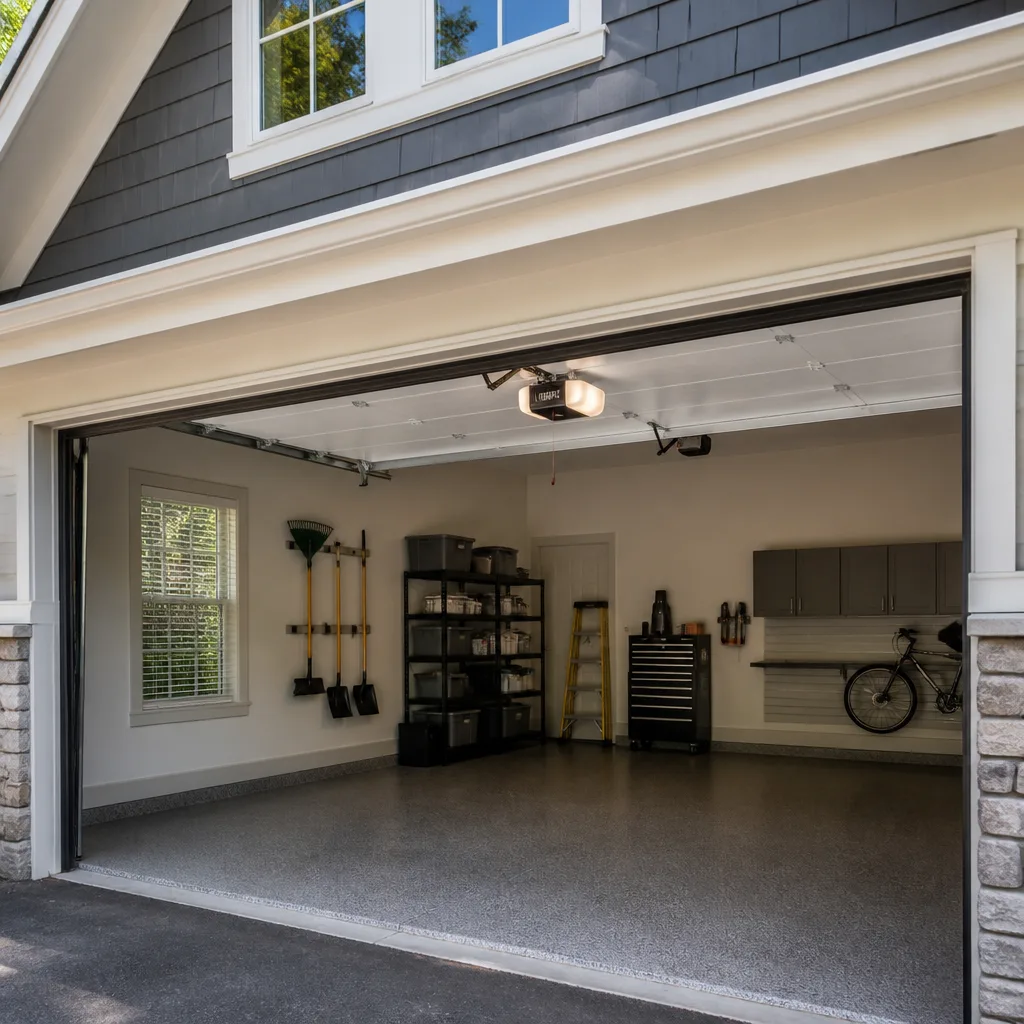
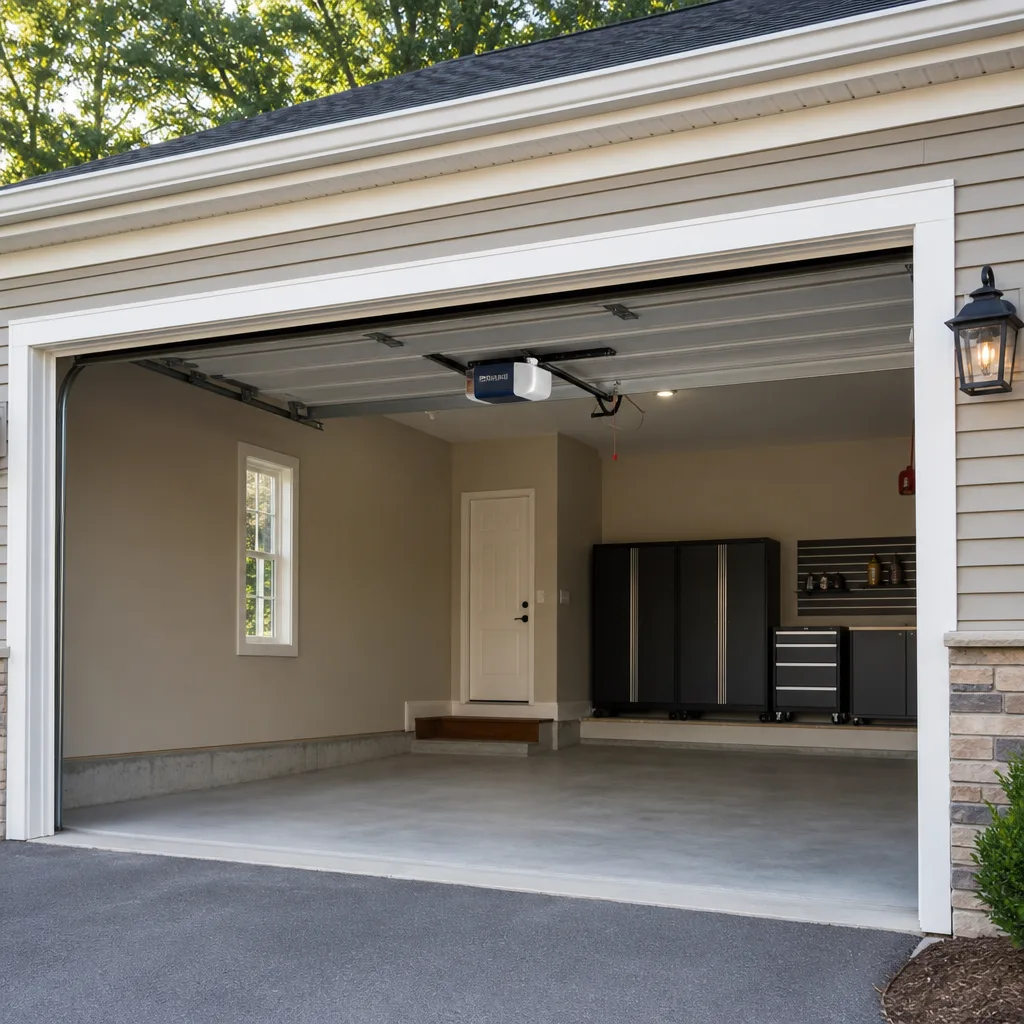
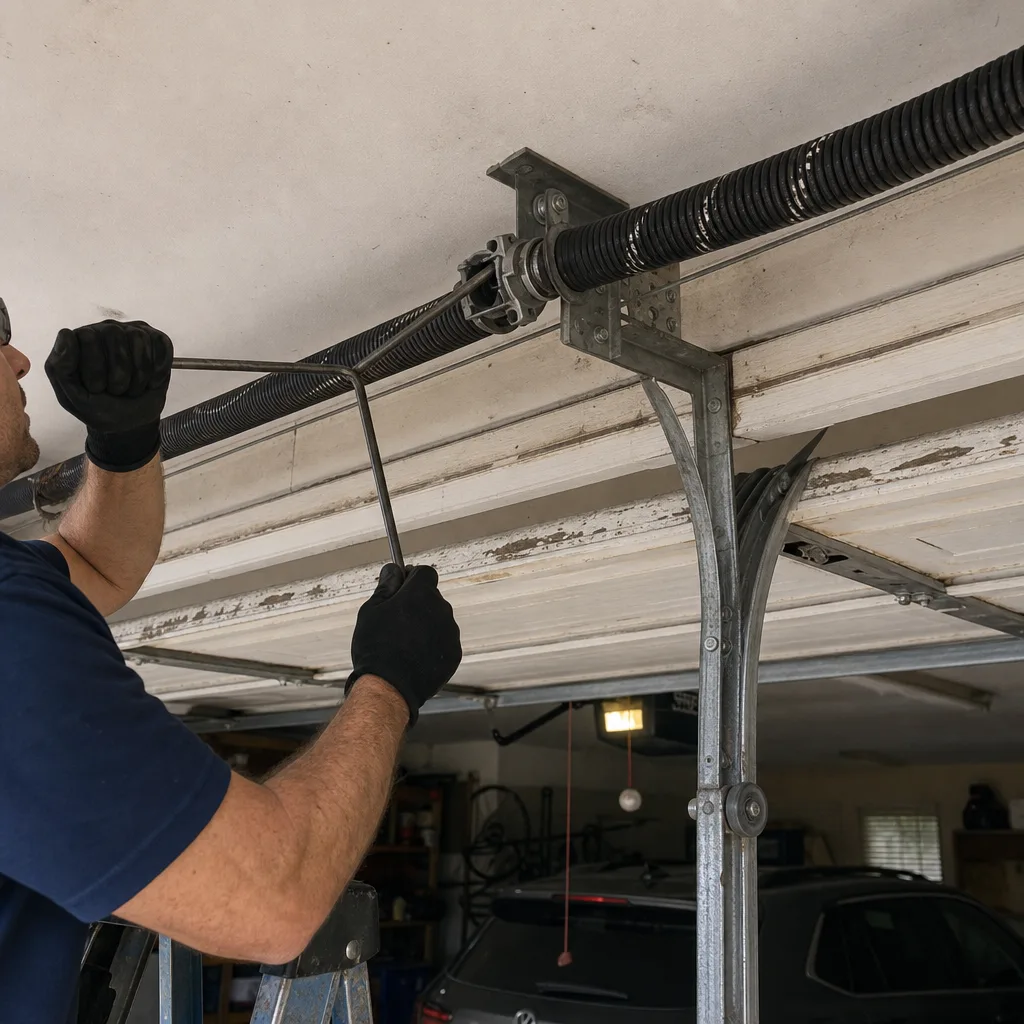 Before
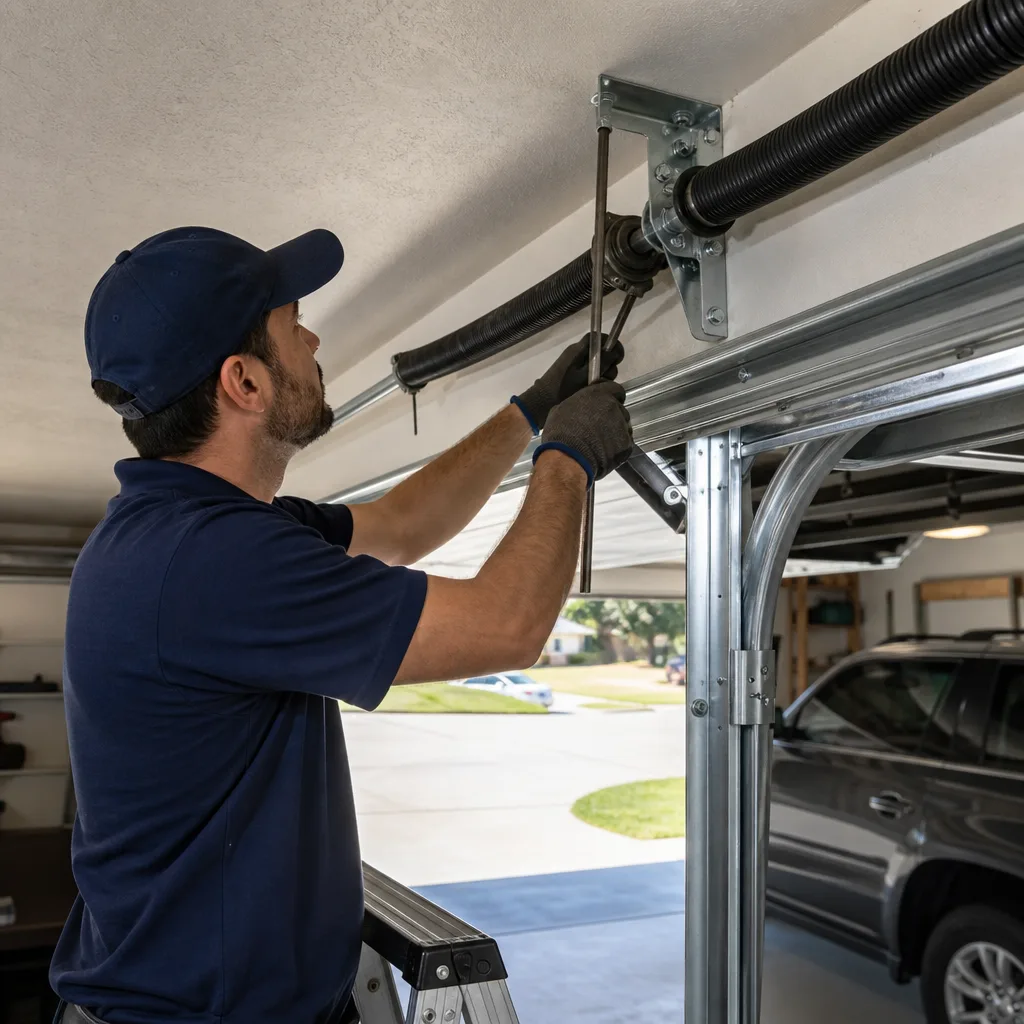 After
After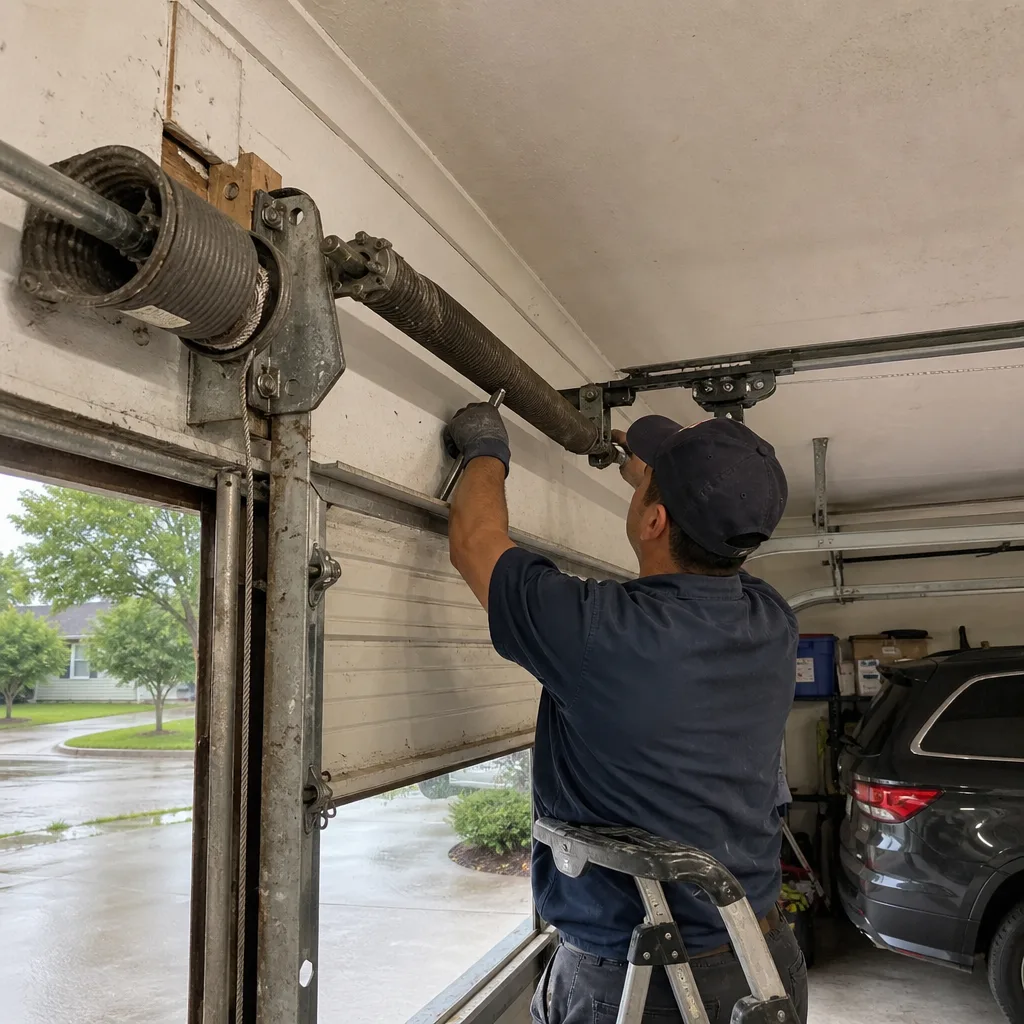 Before
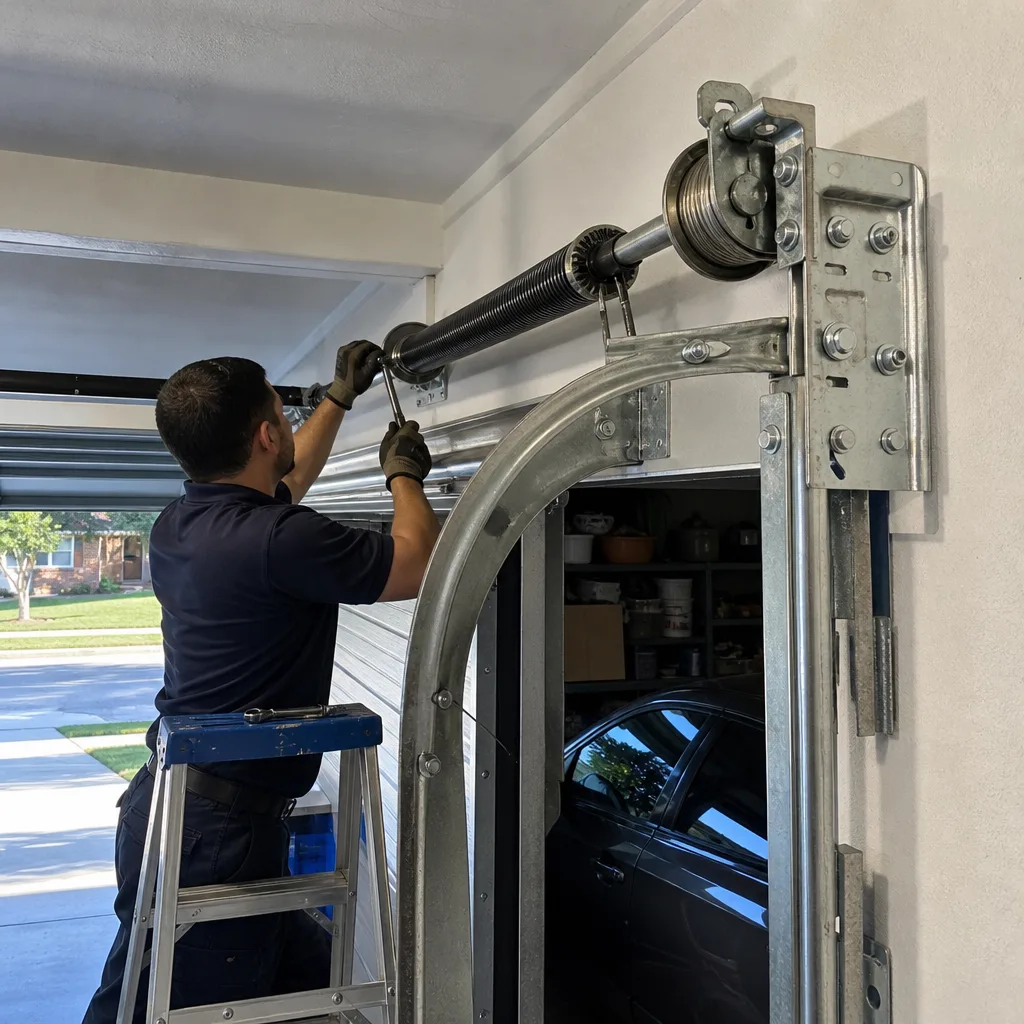 After
After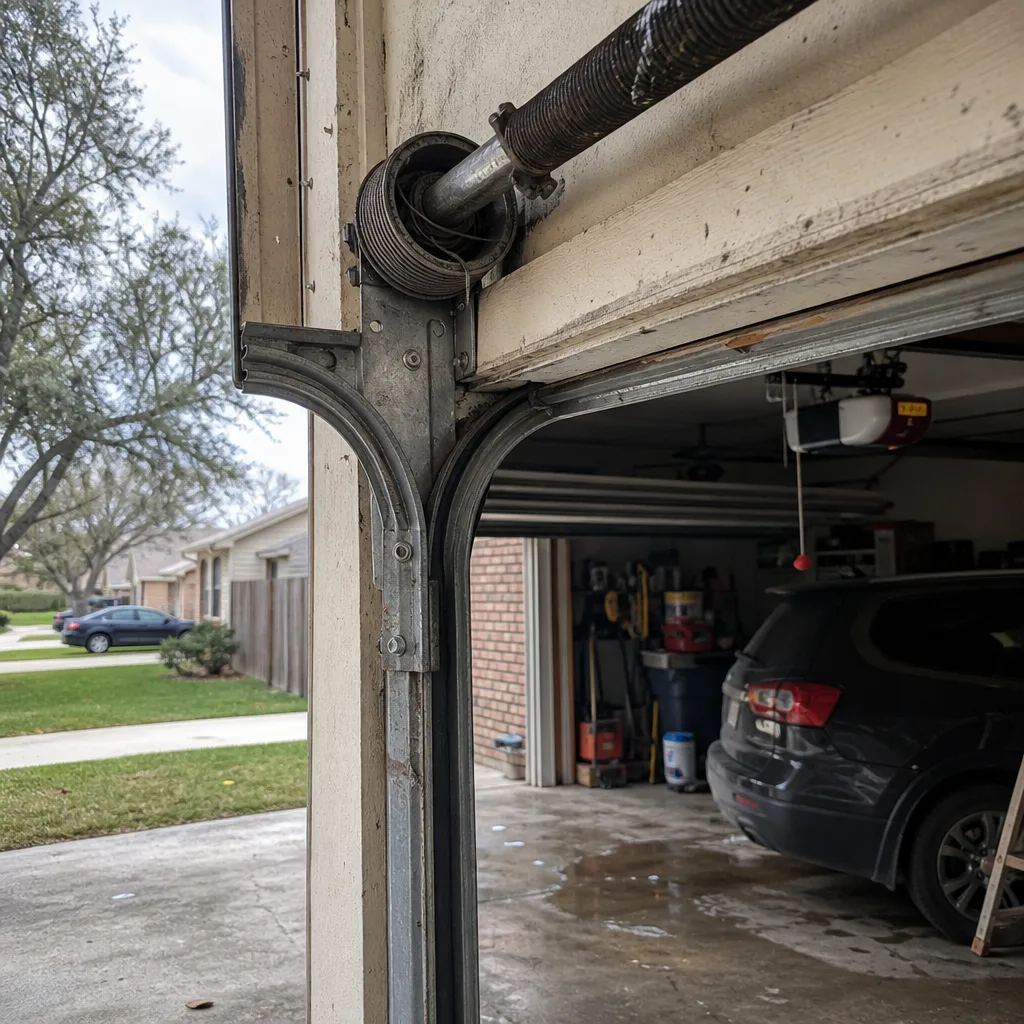 Before
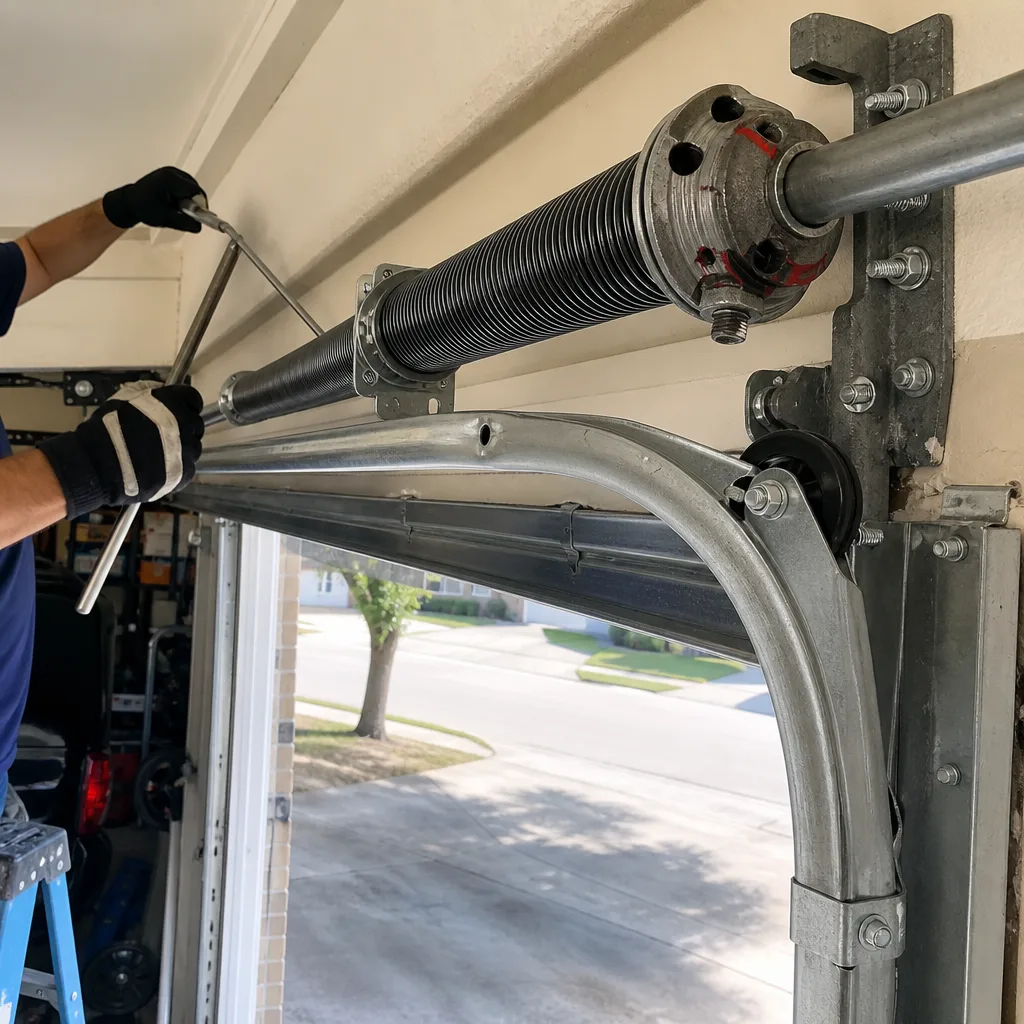 After
AfterGarage Door Permits, Codes & Inspections in TX: What You Need to Know
Texas has no statewide licensing requirement for garage door installation. That surprises most homeowners, and it is why permit rules at the city level matter more here than in states with tighter contractor oversight. A homeowner in League City can replace a garage door on Tuesday, while a neighbor in Friendswood doing the exact same job may need to file paperwork, pay a fee, and schedule an inspection. This guide maps those differences. We will cover when permits trigger in League City, Friendswood, and Pearland; how Gulf Coast wind-load codes change what door you can legally install; and what happens to your insurance when unpermitted work surfaces after a storm.
Quick Answer
Most garage door replacements in Texas do not need a state-level permit, but individual cities often require one if the door opening is altered, if the work is structural, or if the replacement exceeds certain square-footage thresholds. In League City, a direct swap of an existing door on the same tracks usually does not trigger a permit, but changing the opening size, converting to a hurricane-rated assembly, or modifying the header always does. Wind-load requirements along the Gulf Coast add a second layer of code compliance that inland Texas cities do not enforce.
Table of Contents
- Why Texas Has No Statewide Garage Door License
- When a Garage Door Replacement Needs a Permit in League City
- How Friendswood and Pearland Rules Differ
- Gulf Coast Wind-Load Requirements vs. Inland Codes
- What Unpermitted Work Means for Your Insurance Claim
- HOA Approval vs. Municipal Permits
- How to Pull a Permit: Homeowner vs. Contractor
- What Inspectors Actually Check
Why Texas Has No Statewide Garage Door License
Texas is one of a handful of states that does not require a specific license to install or repair garage doors. The Texas Department of Licensing and Regulation oversees electricians, plumbers, and HVAC contractors, but garage door technicians fall outside that framework. This is not an oversight. The legislature has repeatedly left garage door work to municipal building departments, which means the rules you follow depend entirely on which city limits contain your driveway.
For homeowners, this creates two realities. First, any person with a truck and tools can legally call themselves a garage door installer in Texas. Second, the only quality and safety checks come from local permitting offices, not from a state board with the power to revoke a license. We have seen the results of this in League City neighborhoods like South Shore Harbour and Clear Creek, where homeowners who did not follow How to Hire a Garage Door Contractor in League City: A Step-by-Step Guide hired low-bid installers who anchored tracks to rotting trim or used interior-grade hardware on exterior doors. The doors worked for a season. Then the Gulf humidity swelled the wood, the fasteners backed out, and the homeowner was left with a door that rattled in the wind and failed inspection when they later tried to sell.
The absence of state licensing also means there is no standardized continuing education, no mandatory insurance minimum, and no reciprocal recognition between cities. A contractor who works legally in Houston may not meet Galveston County’s requirements for wind-load documentation. At Mainspring Garage Door Co. home, we carry general liability and workers compensation coverage, and we pull permits in every jurisdiction that requires them. But we are not required to do so by any state law. We do it because it is the right way to finish a job.
Homeowners should verify three things before hiring any garage door company in Texas: whether the company carries general liability insurance, whether they will pull the permit if one is required, and whether they provide a written warranty. The 90-Day Done Right Promise we offer is in writing on every job, not because the state demands it, but because a square deal should not depend on which city you live in.
When a Garage Door Replacement Needs a Permit in League City
League City operates under the 2021 International Residential Code with local amendments, enforced by the Building Inspections Division. The permit threshold for garage door work hinges on whether the job is a “like-for-like replacement” or whether it alters the structure, the opening, or the wind-load rating.
A direct replacement - same size door, same track configuration, no changes to the header or framing - typically does not require a permit in League City. This covers the majority of repair calls we handle in neighborhoods like Westover Park and Mar Bella, where a 16-by-7-foot door has reached the end of its service life and the homeowner wants a new Clopay or Amarr panel in the same dimensions. The work is classified as maintenance, not construction.
The permit triggers when any of these conditions apply:
- The rough opening is enlarged or reduced, which changes the structural load path
- The header above the door is modified, replaced, or sistered
- The door is converted to a wind-rated assembly for the first time, requiring new tracks, brackets, and hardware
- The work is part of a larger remodel that already requires a building permit
- An attached garage is being converted to conditioned living space, changing the door’s role in the thermal envelope
League City’s permit fee for a garage door replacement that crosses the threshold is typically based on the valuation of the work. As of our most recent permit pull in 2024, residential garage door permits in League City ran between $85 and $150 depending on whether an inspection was required. The city offers online permit applications for straightforward replacements, but structural modifications require plans and in-person submission at 200 W. Walker Street.
One detail homeowners miss: League City requires wind-load documentation for all new garage door installations, even when a permit is not triggered by the replacement itself. This is a local amendment to the IRC. If you install a non-rated door in a wind-borne debris region, you may pass the initial inspection but fail a certificate of occupancy review later. We have seen this hold up home sales in the Bay Colony and Tuscany Woods subdivisions. The buyer’s inspector flags the door, the title company pauses, and the seller is scrambling for documentation on a ten-year-old installation.
Our approach on every Garage Door Installation in League City is to verify the permit requirement before we unload the truck, pull it if needed, and leave the homeowner with a copy of the approved inspection. No surprises on the bill, and no surprises at closing.
How Friendswood and Pearland Rules Differ
Three cities within ten miles of each other, three different approaches to the same job. This is the reality of Texas municipal governance, and it catches homeowners who assume their League City experience transfers across the county line.
Friendswood enforces the 2021 IRC with stricter amendment packages than League City. Friendswood’s building department requires a permit for any garage door replacement that involves the opener, the tracks, or the spring system. A like-for-like panel swap might slide through without paperwork, but if the technician touches the torsion hardware or the operator, Friendswood wants a permit. The city also mandates a final inspection for all permitted garage door work, with a 24-hour notice requirement. We have had jobs in Sterling Creek and Wedgewood where the permit added two days to the timeline, not because the work was complex, but because the inspector’s calendar was full.
Friendswood’s wind-load requirements mirror League City’s on paper, but the enforcement is more rigorous. Inspectors in Friendswood routinely check that the wind-load sticker on the door matches the engineered drawings on file. If a homeowner upgraded from a 90-mph door to a 130-mph assembly without updating the permit documentation, the inspector will red-tag the installation. The correction requires a plan revision, a re-inspection fee, and sometimes a return visit from the installer.
Pearland uses the 2021 IRC with amendments adopted from the Brazoria County model code. Pearland’s threshold for garage door permits is higher than either League City or Friendswood. A straightforward replacement on an existing opening generally does not require a permit unless the door faces a street and is visible from the public right-of-way, in which case the city’s design review staff may require aesthetic approval through the planning department. This is not a building code issue. It is a zoning and appearance issue, and it can take longer than the structural permit.
Pearland’s wind-load zone is slightly inland of League City’s, which matters for homes near the Shadow Creek Ranch or Silverlake developments that sit on the edge of the wind-borne debris region. A door that is code-compliant in Pearland may not satisfy League City’s requirements, even though the two cities are separated by fewer than eight miles. We have had customers move from Pearland to League City and assume their existing garage door meets code. It often does not, and the discrepancy surfaces during the buyer’s inspection.
The practical takeaway: never assume. Call the building department of the city where the work will occur, give them the address and the scope, and ask for a written determination. We do this on every job that crosses city lines. It takes ten minutes and saves weeks of delay.
Gulf Coast Wind-Load Requirements vs. Inland Codes
The International Residential Code sets a baseline wind speed of 115 mph for most of Texas. The Gulf Coast amendments push that to 130 mph or higher, and they add a requirement for wind-borne debris protection in designated zones. Garage doors are the largest opening in most residential walls, which makes them the weakest link in a home’s envelope during a hurricane.
League City sits in a wind-borne debris region as defined by the Texas Department of Insurance and the International Code Council. This means any new garage door installation must either be impact-rated or protected by an approved shutter system. The impact rating is the more common solution. Doors are tested to ASTM E1886 and E1996 standards and receive a design pressure rating measured in pounds per square foot. A typical residential garage door in League City needs a design pressure of at least 20 psf for a single door and 15 psf for a double door, though exact requirements vary with the building’s exposure category and roof height.
What this means in practice: the door you can buy at a big-box store in Houston may not be legal to install in League City. We see this regularly. A homeowner purchases a Chamberlain or Genie operator and a Clopay panel from a home improvement warehouse, then discovers the door lacks the Miami-Dade County approval or the TDI listing required for coastal installation. The door goes back, the timeline slips, and the homeowner is frustrated with a process they did not know existed.
Inland cities like Katy, Sugar Land, and parts of Pearland use the base IRC wind speed of 115 mph and do not require wind-borne debris protection for garage doors. A door rated for 115 mph is legal there but would fail inspection in League City. The cost difference is significant. A wind-rated 16-by-7-foot steel door with reinforced tracks and heavy-duty hardware typically runs $400 to $800 more than a standard inland-rated equivalent. That gap widens if the homeowner needs a custom wind-load engineering letter for a non-standard opening.
We stock wind-rated doors from Clopay and Amarr on our trucks for this reason. Most League City jobs are completed in a single visit because we do not have to special-order compliant hardware. The 90-Day Done Right Promise covers the installation, and we provide the wind-load certification paperwork at completion so the homeowner has it for their records, their insurance, and their eventual sale.
What Unpermitted Work Means for Your Insurance Claim
Homeowners insurance policies in Texas contain a clause that most people never read until they need it: the policy may deny or reduce coverage for damage that results from work performed without required permits. This is not theoretical. We have been called to League City homes after Hurricane Nicholas and after smaller named storms where the garage door failed, the claim was filed, and the adjuster discovered the door had been replaced without a permit or without wind-load documentation.
The sequence is predictable. The storm hits. The garage door buckles or blows in. Water enters the garage, damages vehicles, tools, and stored items, and sometimes penetrates the interior of the home. The homeowner files a claim. The adjuster reviews the property records, finds no permit for the garage door installation, and invokes the policy’s workmanship or code compliance exclusion. The claim is denied or capped at the value of a code-compliant door, leaving the homeowner to cover the difference.
Texas is a consumer-friendly state in many respects, but courts have upheld these denials when the unpermitted work is clearly linked to the damage. In 2019, a Harris County case affirmed an insurer’s right to deny a garage-door-related claim where the door lacked the wind rating required by local amendment. The homeowner had saved $300 by skipping the permit. The denial cost them $14,000 in interior repairs.
The risk is not limited to total failures. A partial claim, where the door is damaged but the home is not breached, can still be reduced. The adjuster may apply depreciation based on the door’s non-compliant status, or may require the homeowner to bring the door to code as a condition of settlement. That means paying for a new wind-rated door out of pocket before the insurer releases funds for the storm damage.
Our recommendation is straightforward: pull the permit if one is required, keep the inspection approval, and file the wind-load certificate with your insurance agent. The paperwork takes minutes. The protection lasts for the life of the policy. We provide copies of all permits and certificates on every Garage Door Repair in League City that triggers documentation, and we encourage homeowners to forward them to their agent.
HOA Approval vs. Municipal Permits
Homeowners in League City communities like South Shore Harbour, Magnolia Creek, or The Landing at Bay Colony face a dual approval process that surprises many first-time garage door buyers. The city permit and the HOA architectural review operate on separate tracks, with different timelines, different standards, and different consequences for non-compliance.
The municipal permit is about safety and code compliance. Will the door withstand wind loads? Is the header properly supported? Does the opener meet electrical codes? The HOA review is about appearance. Color, panel style, window configuration, and hardware finish. An HOA can reject a door that is fully code-compliant, and a city can approve a door that the HOA finds visually unacceptable. Neither defers to the other.
We have seen HOAs hold up projects longer than city building departments. South Shore Harbour’s architectural committee meets monthly, requires color samples and manufacturer cut sheets, and mandates a 30-day notice period before exterior changes are visible from the street. A homeowner who orders a door in early March may not receive HOA approval until the April meeting, even if the city permit was issued in 48 hours. The door sits in the manufacturer’s warehouse, the installer schedules and reschedules, and the homeowner pays for storage or rush fees.
The reverse problem also occurs. A homeowner rushes to beat an HOA deadline, installs the door, and discovers the city requires a permit they never obtained. Now they have an approved HOA installation that is illegal under municipal code. The correction requires either retroactive permitting, which League City sometimes allows with a penalty, or removal and reinstallation, which no homeowner wants to hear.
The correct sequence:
- Submit HOA application with manufacturer specifications, color samples, and photos of the existing door
- Wait for written HOA approval before ordering materials
- Apply for city permit if the scope triggers one
- Schedule installation only after both approvals are in hand
- Request final city inspection if required
- Submit completion photos to HOA if the covenants require it
We guide our League City customers through this sequence on every job in a deed-restricted community. It adds a week to the front end and saves a month of headaches on the back end. A square deal includes managing the paperwork, not just hanging the door.
How to Pull a Permit: Homeowner vs. Contractor
In Texas, the person who pulls the permit bears the liability for code compliance. This is a point that deserves emphasis. If a homeowner pulls their own permit, the homeowner is the responsible party. If the contractor pulls it, the contractor is on the hook. The choice affects warranty enforcement, inspection scheduling, and who the city calls when something is wrong.
Homeowner-pull permits are common in League City for small jobs that cross the threshold. The process starts with an application on the city’s portal or at the Building Inspections office. The homeowner pays the fee, provides a scope description, and schedules the inspection. The advantage is cost: there is no contractor markup on the permit fee. The disadvantages are significant. The homeowner must be present for inspection, must understand the code requirements well enough to discuss them with the inspector, and must carry the liability if the work fails. If the installer makes an error and the inspector red-tags the job, the homeowner is the one who must coordinate the correction.
We do not recommend homeowner-pull permits for garage door work that involves structural modification, wind-load upgrades, or electrical changes to the opener circuit. The savings are usually under $100. The exposure is substantial.
Contractor-pull permits transfer the compliance burden to the company doing the work. At Mainspring Garage Door Co., we pull permits in League City, Friendswood, Pearland, and every other jurisdiction we serve. We know the inspectors by name, we know which details they check first, and we know how to correct a finding without involving the homeowner. If an inspector flags a bracket placement or a missing label, we handle it. The homeowner does not take time off work, does not argue code interpretations, and does not pay a re-inspection fee.
The permit fee is listed separately on our proposal when it applies. There is no markup. We pass through the city’s actual charge because transparency is part of a square deal. The homeowner receives a copy of the approved inspection for their files, and we retain the original in our job record for warranty reference.
One caution: some low-bid contractors in the League City market refuse to pull permits, or they ask the homeowner to do it. This is a red flag. A contractor who will not stand behind the code compliance of their own work is unlikely to honor a warranty when it matters. We have been called to repair or replace work from these outfits more times than we can count. The homeowner saved $200 on the front end and spent $800 fixing corners that were cut.
What Inspectors Actually Check
A garage door inspection in League City is not a casual walkthrough. Inspectors have a checklist derived from the amended IRC, the manufacturer’s installation instructions, and the engineered wind-load documentation. Understanding what they check helps homeowners ask better questions of their installer and spot problems before the inspector does.
The inspection typically covers these elements:
- Wind-load label and tracking: The inspector verifies that the door’s design pressure rating matches the permit application and the local amendment. The label must be legible and permanently affixed. We have seen labels painted over or removed by homeowners who thought they were unsightly. That is an automatic fail.
- Track anchorage: Brackets must be secured to framing members, not to trim or sheathing alone. In League City’s humid climate, inspectors check that fasteners are galvanized or stainless and that they are not overdriven into compromised wood. We replaced a door in Clear Lake Shores where the previous installer had anchored tracks with drywall screws. The inspector red-tagged it before we arrived to quote the correction.
- Spring and cable containment: Extension springs must have safety cables running through the center. Torsion springs must be properly wound and seated on a shaft with adequate bearing support. The inspector will cycle the door manually to check balance.
- Opener safety features: Photo eyes must be mounted 6 inches or less from the floor and aligned. The reversal test is performed with a 2-by-4 board placed flat on the floor. If the door does not reverse on contact, the installation fails. We test this ourselves before the inspector arrives.
- Header and framing: For jobs that triggered the permit through structural work, the inspector checks that the header is properly sized and supported, that jack studs are in place, and that the rough opening is square within tolerance.
- Electrical: Hardwired openers must be on a dedicated circuit or meet the local amendment for shared circuit sizing. GFCI protection is required for outlets in garages under current NEC adoption.
League City inspectors are thorough but fair. They want the job done right, not done twice. We have built relationships with the inspection staff over decades of work in the city, and we schedule our inspections with full knowledge of what each inspector prioritizes. Most of our inspections pass on the first visit because we do not call for inspection until we have verified compliance ourselves.
The inspection approval is the final step in the permit lifecycle. The homeowner receives a certificate of completion, which should be kept with the home’s permanent records. It is valuable at sale, essential for insurance, and proof that the work was done to code. We provide this document on every permitted job, along with our written 90-Day Done Right Promise. Two pieces of paper that say the same thing in different ways: this job was done right, and we stand behind it.
Common Mistakes to Avoid
- Assuming no permit means no rules. Even when a permit is not required, the installation must still meet code. An unpermitted job that violates wind-load requirements can still trigger insurance problems and resale headaches in League City.
- Buying the door before checking HOA requirements. We have seen homeowners in Mar Bella and Tuscan Lakes purchase custom-colored doors that the HOA rejected for shade variance. The restocking fee often exceeds the permit cost.
- Hiring based on the lowest bid without verifying permit handling. A contractor who bids $150 less by shifting permit liability to the homeowner is not offering savings. They are offering a different product entirely, one where you carry the risk.
- Ignoring wind-load documentation on inland-rated doors. A door rated for 115 mph may function perfectly in League City for years, but it will fail inspection at sale and may fail structurally in a named storm. The Gulf Coast climate demands Gulf Coast ratings.
- Scheduling installation before HOA approval. Some covenants allow the HOA to require removal of unapproved alterations at the homeowner’s expense. A garage door is a visible, expensive alteration. Wait for the letter.
- Discarding permit paperwork after completion. Keep the approved inspection, the wind-load certificate, and the manufacturer’s installation instructions. These documents transfer with the home and protect against future disputes.
When to Call a Professional
Pull a permit yourself when the job is a simple like-for-like replacement with no structural, electrical, or wind-load complications, and when you have time to manage the inspection schedule. For everything else, a professional who knows League City’s inspectors, understands the amended IRC, and carries the right insurance is the safer path. Mainspring Garage Door Co. offers free estimates in League City. We will tell you whether your job needs a permit before we quote the work, and we will pull it ourselves if it does. Call (936) 246-3131 to speak with a live person, any hour of any day.
Frequently Asked Questions
A direct replacement of an existing door on the same tracks usually does not require a permit in League City, but any change to the opening size, header, or wind-load rating triggers the permit requirement. Call the Building Inspections Division at 200 W. Walker Street with your address and scope for a definitive answer, or call us and we will verify it for you.
Residential garage door permits in League City typically range from $85 to $150 depending on whether the job requires inspection. We list the exact permit fee separately on our proposal with no markup when a permit is needed. Call (936) 246-3131 for a free estimate that includes permit verification.
Texas law does not prohibit homeowner installation, but League City and neighboring cities still enforce code compliance and permit requirements regardless of who does the work. Garage door springs are under extreme tension and can cause serious injury or death if handled improperly. We recommend professional installation for any job involving torsion springs, wind-load upgrades, or structural modification.
League City requires wind-borne debris protection for garage doors, typically satisfied by an impact-rated door with a design pressure of at least 20 psf for single doors and 15 psf for double doors. Exact requirements vary with exposure and roof height. We verify the rating on every door we install and provide the certification paperwork at completion.
Texas homeowners policies may deny or reduce claims where unpermitted work contributed to the damage. Courts have upheld these denials for garage doors lacking required wind-load ratings. The safest course is to pull required permits, keep the inspection approval, and file the wind-load certificate with your insurance agent.
City permits for straightforward garage door replacements are often issued within 48 hours in League City. HOA architectural review can take 30 days or longer depending on meeting schedules and submission completeness. We recommend submitting to the HOA first, then applying for the city permit while HOA review is pending.
The Bottom Line
Texas leaves garage door regulation to cities, and cities within sight of each other can demand different paperwork for the same job. In League City, the permit threshold turns on whether your replacement alters structure or wind protection. Along the Gulf Coast, wind-load requirements add a non-negotiable layer that inland Texas does not enforce. Insurance claims can be denied when unpermitted or non-compliant work fails in a storm. HOAs operate on their own timeline and can reject code-compliant doors for aesthetic reasons. The homeowner who understands these layers before calling a contractor saves money, avoids delay, and sleeps better when the next storm rolls in. We have been navigating these layers in League City since 2016. If you are unsure where your job falls, call us. We will give you a straight answer and a flat price before any work begins.
Written by Carl Dutton, Owner at Mainspring Garage Door Co., serving League City since 2016.