
Last updated September 10, 2026
Full 25-point door and opener safety check with every visit - springs, cables, rollers, tracks, and your LiftMaster or Chamberlain opener included
You get a price before we start. It does not change when the truck arrives.
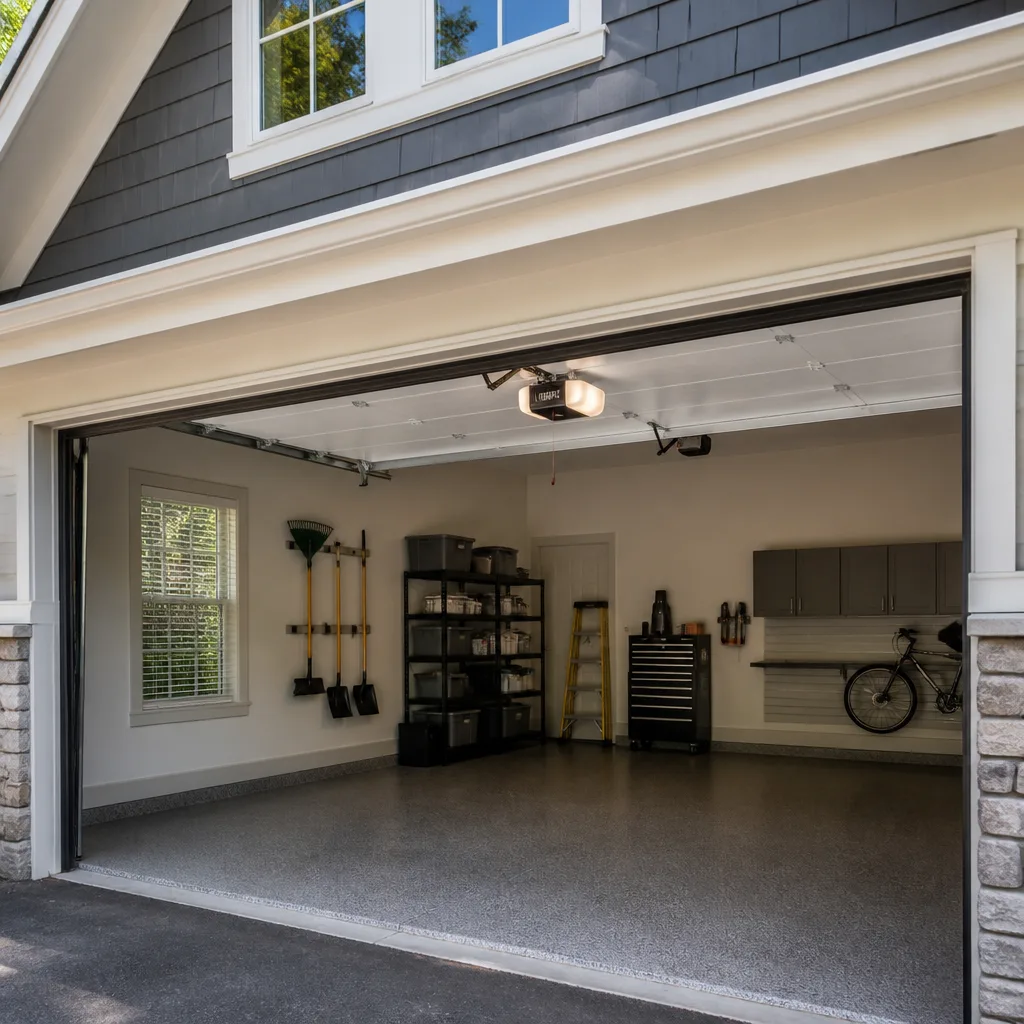
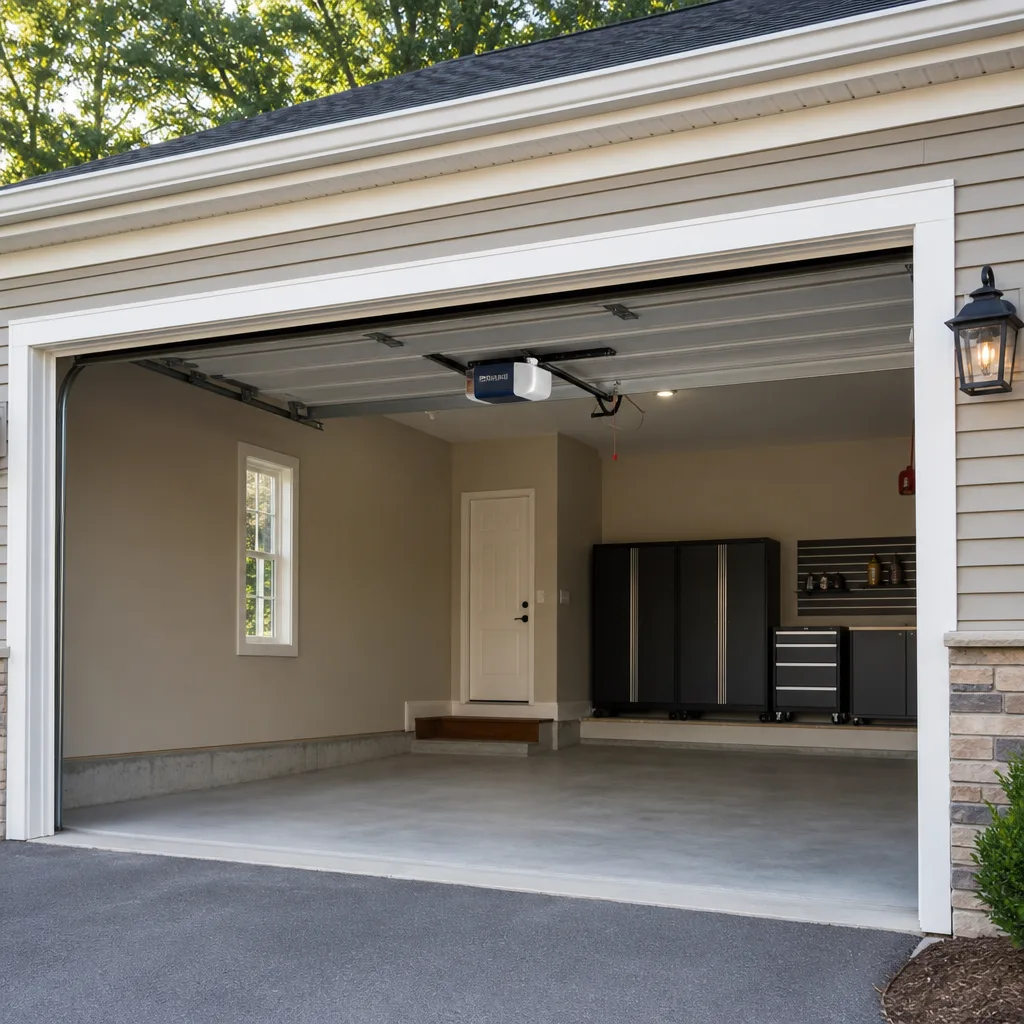
 Before
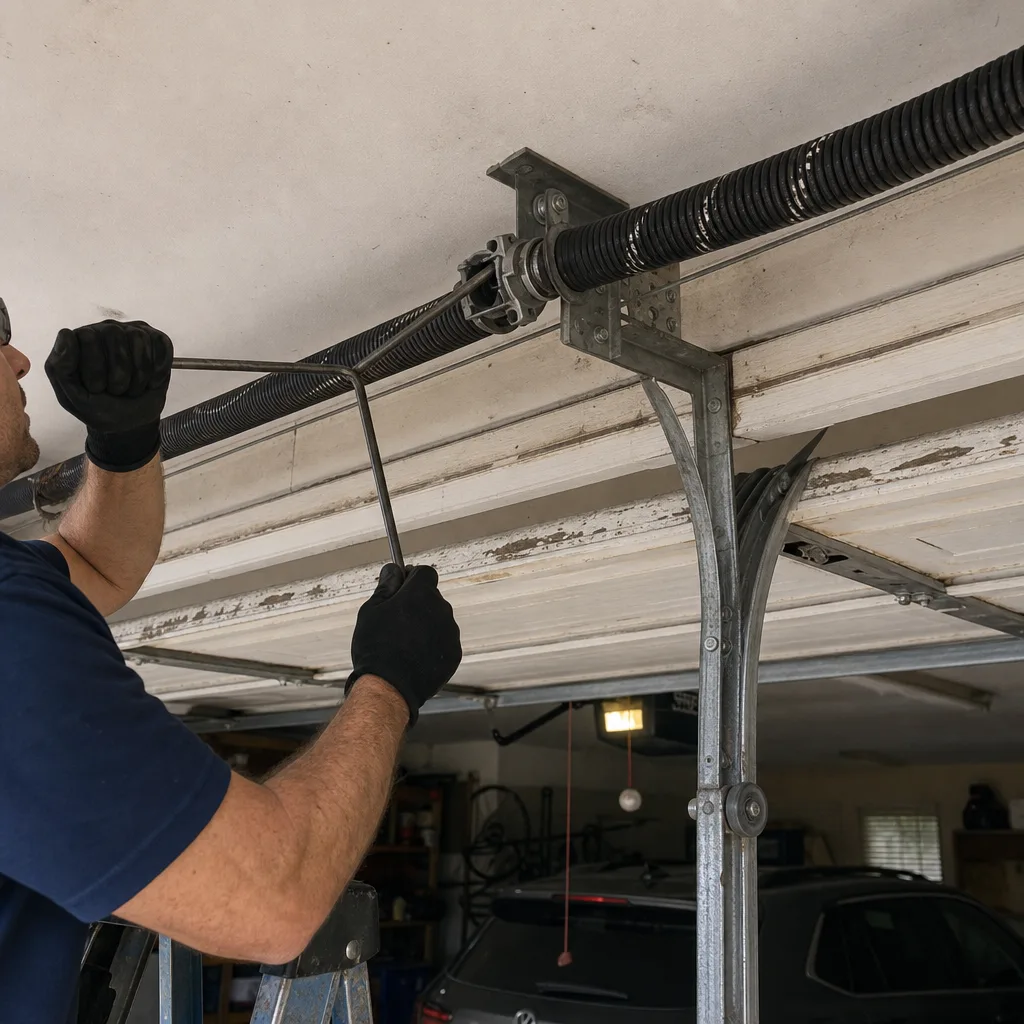
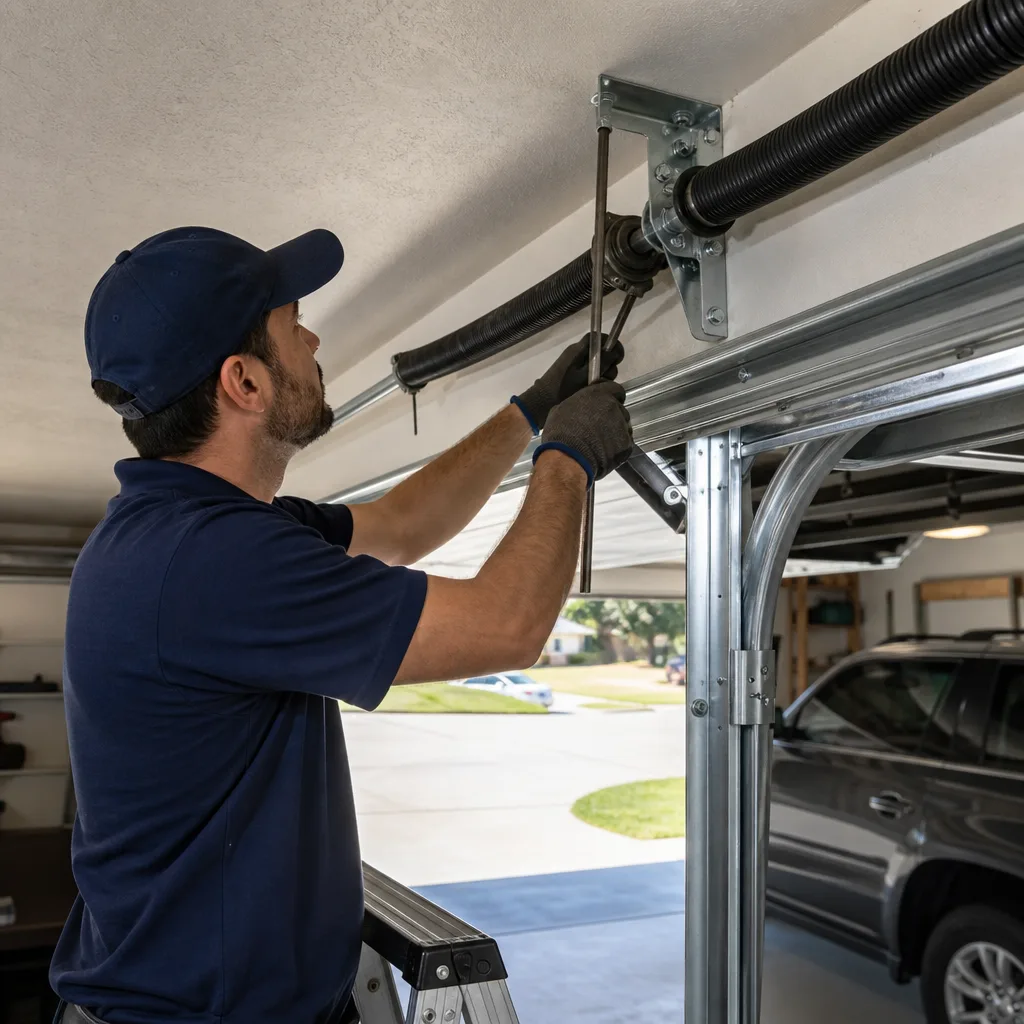 After
After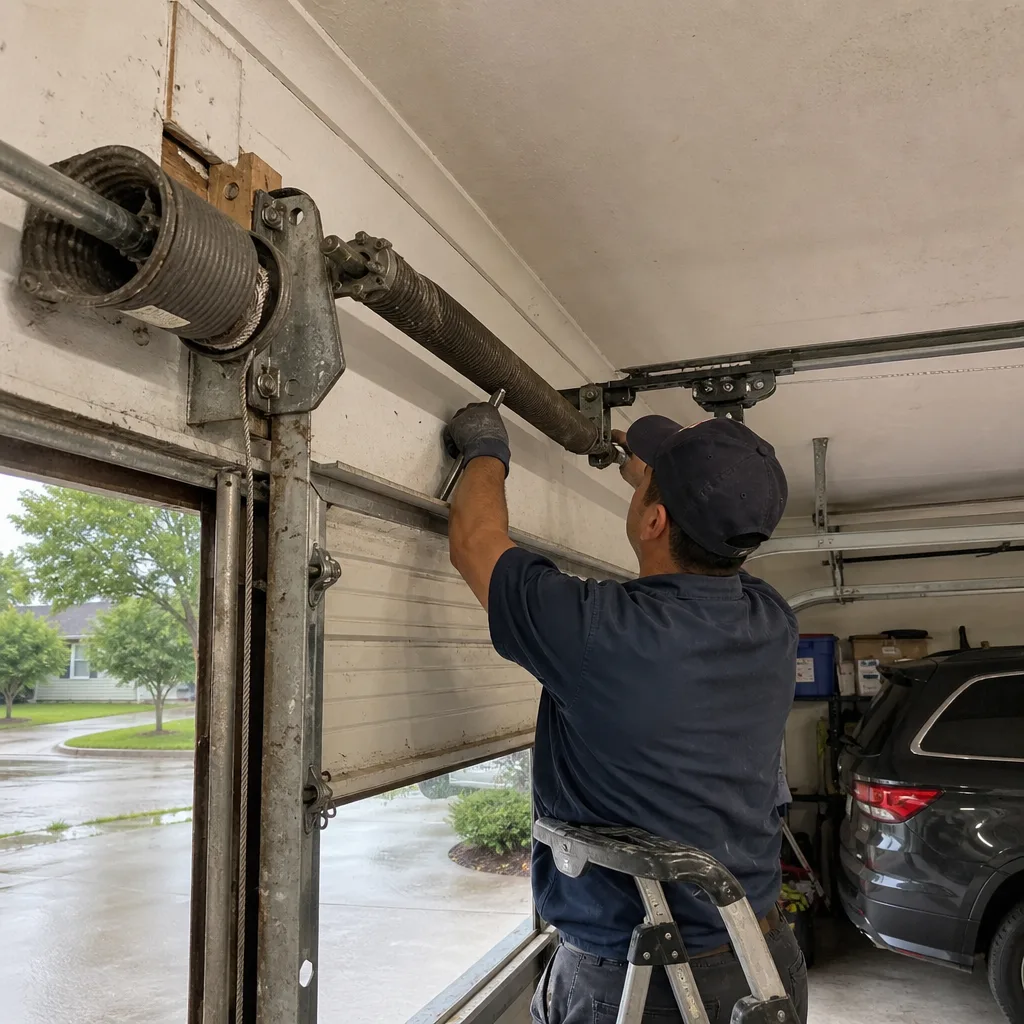 Before
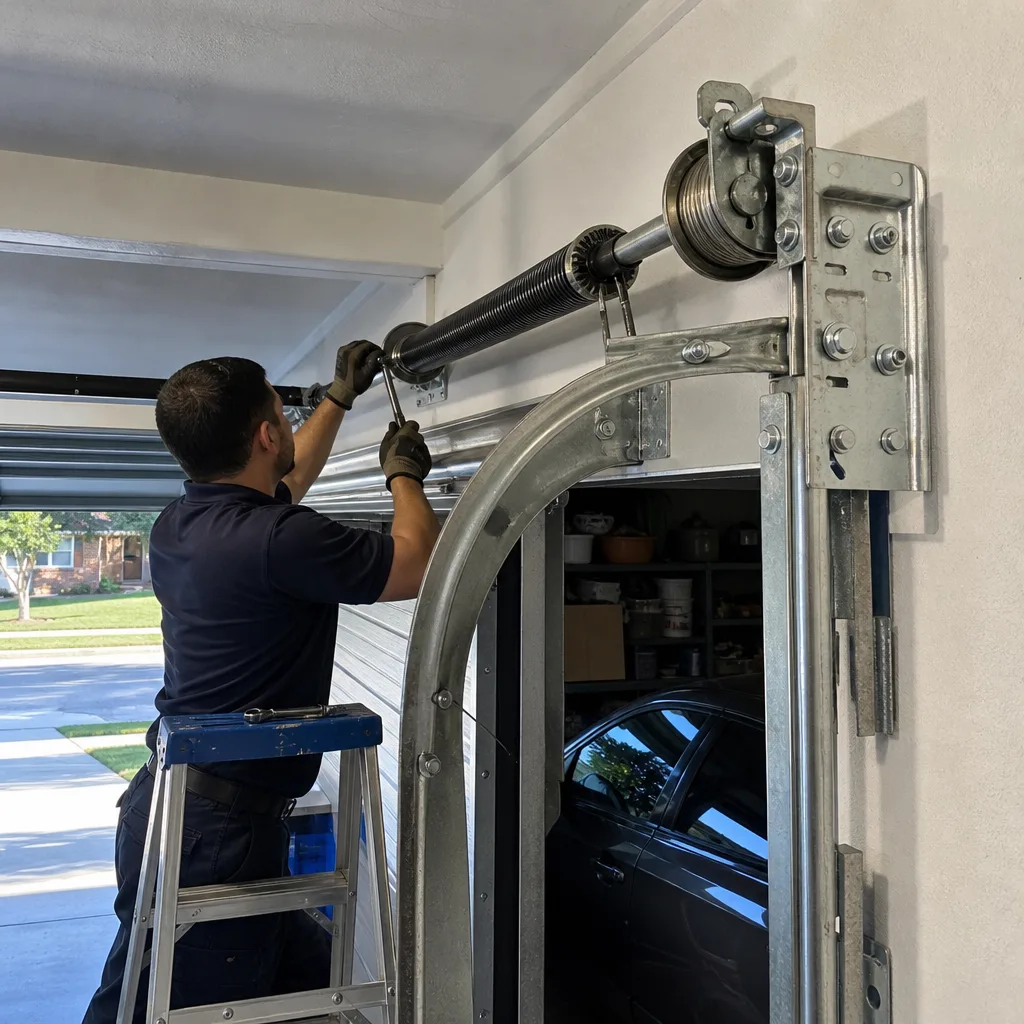 After
After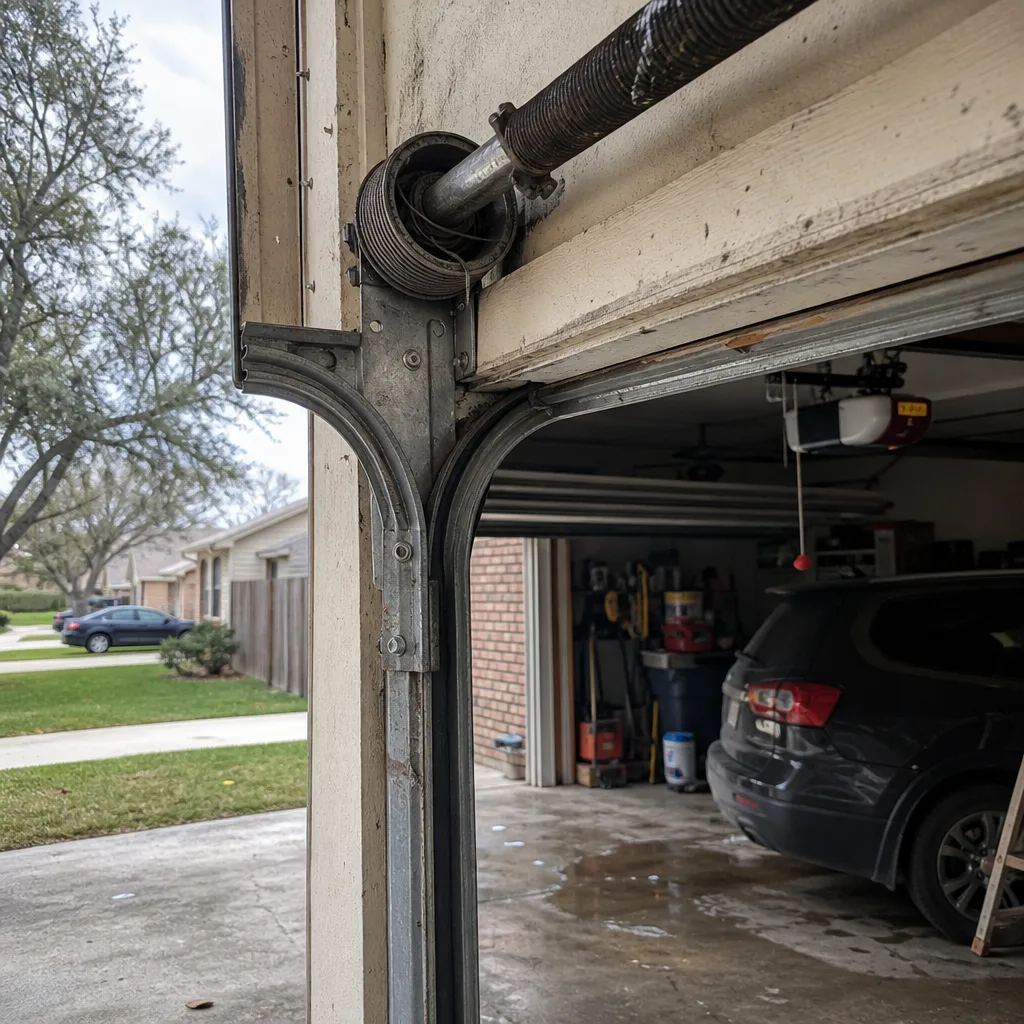 Before
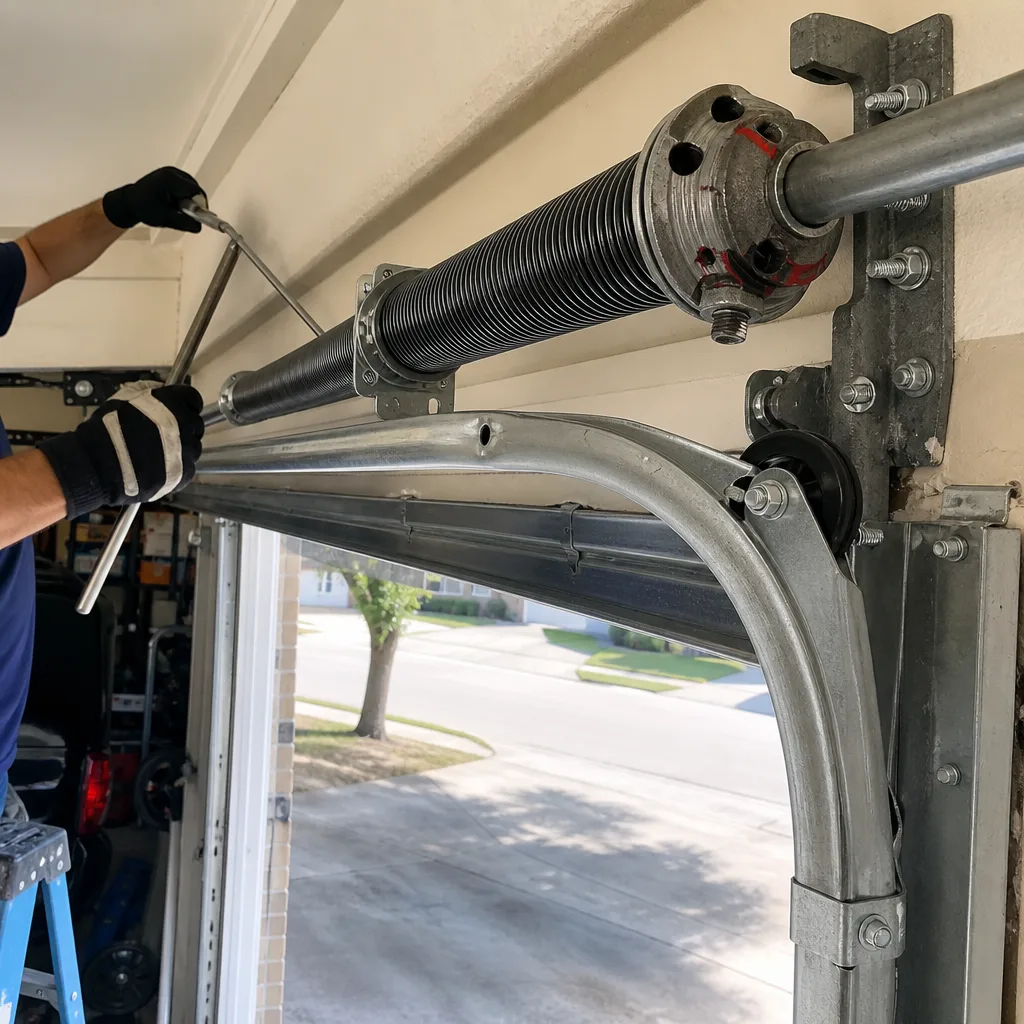 After
AfterGarage Door Repair Maintenance Checklist for League City Homeowners
A spring that fails in January in League City usually cracked in August. The thermal cycling between 100°F days and sudden cold fronts is the real culprit, and no generic checklist accounts for it. Most maintenance guides recycle the same twelve bullet points regardless of climate, but a garage door in League City faces three distinct stress seasons: hurricane prep, peak summer, and the brief but jarring cold snaps that cause more failures than most homeowners expect. This guide is built around those three seasons, plus the year-round habits that keep a door running quiet and true.
Quick Answer
League City homeowners should inspect their garage door monthly for balance, lubrication, and hardware tightness; perform a deeper seasonal check before hurricane season (May), during peak heat (August), and before the first cold snap (December); and schedule a professional tune-up annually. The $89 Seasonal Tune-Up from Mainspring Garage Door Co. home covers what most homeowners miss.
Table of Contents
- The Three Seasons That Stress a League City Garage Door
- Monthly Homeowner Checklist
- Hurricane Season Prep: The Pre-Storm Checklist
- August Heat Protocol: When Lubricant Fights Against You
- Winter Snap Checklist: The 3-5 Days That Break Things
- How to Log Observations Between Service Visits
- Owner-Serviceable Tasks vs. Liability Work
- Common Mistakes to Avoid
- When to Call a Professional
- Frequently Asked Questions
- The Bottom Line
The Three Seasons That Stress a League City Garage Door
Generic maintenance advice treats every zip code the same. League City is not every zip code.
We’re thirty miles from the Gulf, which means salt air, humidity that hangs at 80% for weeks, and hurricane season that runs from June through November. Summers regularly hit 95°F and stay there. Winters are mild until they aren’t: a Blue Norther can drop temperatures from 70°F to 32°F in six hours, and those sudden shifts are murder on metal components.
Here’s what we’ve learned in 42 years of serving this market. The doors that last twenty years are not the ones with the most expensive parts. They’re the ones whose owners match their maintenance to the actual stresses the door faces. In Garage Door Repair in League City, we see three failure patterns that trace directly to these three seasons:
- Hurricane season failures: Doors that weren’t checked for manual release function, battery backup, or anchor bolt integrity before a storm. When power goes out and the opener can’t run, a door that won’t open manually traps vehicles inside. Worse, a door with corroded anchor bolts can become a projectile in high wind.
- August heat failures: Springs that crack, openers that overheat, and lubricants that thin out and drip onto concrete. Standard white-lithium grease, which works fine in temperate climates, becomes counterproductive above 95°F. It separates, runs, and attracts grit.
- Winter snap failures: Seals that were already stiffened by summer UV become brittle in the first freeze and crack. Openers strain against thickened grease on cold tracks. Torsion springs, micro-fractured by months of thermal cycling, finally let go.
The rest of this guide breaks each season into specific, actionable steps. But the underlying principle is simple: maintenance in League City should be seasonal, not just annual.
Monthly Homeowner Checklist
These are the habits that take ten minutes and prevent the emergency call. Do them on the first Saturday of each month. Write down what you find.
- Visual inspection of springs and cables. Look for gaps in torsion springs, rust flakes, or fraying in lift cables. Do not touch. If you see separation in a spring or broken strands in a cable, stop using the door and call a professional. These components are under extreme tension and can cause serious injury or death if handled improperly.
- Balance test. Disconnect the opener using the manual release handle. Lift the door halfway by hand. A properly balanced door stays in place. If it falls or shoots up, the spring tension is off. This is a pro fix, not a DIY project.
- Reversal test. With the opener reconnected, place a 2×4 flat on the ground where the door meets the floor. Close the door. It should reverse within two seconds of contact. If it doesn’t, the force setting or safety sensors need adjustment.
- Sensor alignment check. The two photo-eye sensors at the bottom of the tracks should face each other directly, with indicator lights steady (not blinking). Clean lenses with a soft cloth. In League City’s humidity, condensation and spider webs are common culprits for misalignment.
- Lubrication of moving parts. Apply a silicone-based spray lubricant to rollers, hinges, and the top of the rail (never the chain or belt itself). Wipe excess. In summer, check again mid-month: heat thins lubricant faster than most homeowners realize.
- Tighten hardware. Use a socket wrench on track brackets and roller brackets. Do not overtighten. Check for loose bolts on the opener rail mounting.
- Listen. Grinding, squealing, or rhythmic clicking are early warnings. A door that runs quiet today is a door that won’t need a major repair tomorrow.
Keep a simple notebook or phone note with dates and observations. “June 3: slight squeak from left roller. July 1: squeak gone after lubrication. August 5: squeak returned, louder.” This pattern tells a technician more than a single complaint ever could.
Hurricane Season Prep: The Pre-Storm Checklist
League City sits in Evacuation Zone C. That means when a named storm enters the Gulf, you’re deciding whether to stay or go - and your garage door is either an asset or a liability in that decision.
A garage door is the largest opening in most houses. In a hurricane, it is the most likely point of failure. If the door goes, internal pressure builds, and the roof can lift. The pre-storm checklist is not optional here. It is structural survival.
Two Weeks Before Peak Season (Late May)
- Test the manual release. Pull the red handle. The door should move freely by hand. If it binds, the tracks are out of alignment or the springs are failing. Fix this now, not when the power is out and rain is horizontal.
- Verify battery backup on the opener. Unplug the opener. Press the remote. If nothing happens, the battery is dead or missing. LiftMaster and Chamberlain openers manufactured after 2019 include battery backup by law, but batteries degrade in heat. Replace every 2-3 years in this climate.
- Inspect anchor bolts and track brackets. Look for rust, especially at the base of vertical tracks where splash-back from driveway runoff collects. In League City’s clay soils, minor foundation settling is common and can loosen track alignment. A bracket that moves in wind is a bracket that will fail.
- Check weatherstripping at the bottom and sides. A proper seal keeps wind-driven rain out. If the bottom seal is cracked or the side seals are gaping, replace them. Water intrusion during a storm damages stored items and creates mold conditions within 48 hours in our humidity.
- Clear the garage interior. Anything that can become a projectile should be secured or removed. This includes the obvious - lawn furniture - and the less obvious: bikes hung on wall hooks, shelving units, and loose attic access panels.
48 Hours Before Landfall
- Close and lock the door. If your opener lacks a manual lock, use the slide bolt or a reinforced brace.
- Move vehicles inside. A car against the door adds mass. If you evacuate, this is impossible, which is why the anchor bolt inspection matters more.
- Document the door’s condition with photos for insurance.
After any named storm passes, run the full monthly checklist again. Wind stress reveals weaknesses that were hidden before.
August Heat Protocol: When Lubricant Fights Against You
August in League City is not just hot. It is sustained thermal load on every metal component of a garage door system. Ambient temperatures in an uninsulated garage regularly reach 110°F. Concrete floors radiate heat through the night. This is when we see the most opener failures and the most misdiagnosed “mystery” noises.
The critical fact: standard white-lithium grease, the default recommendation in most maintenance guides, separates above 95°F. The oil carrier runs. The thickener stays behind. What you’re left with is a sticky residue that attracts dust and grit, which then acts as grinding compound on rollers and hinges.
In League City’s climate, we recommend a different approach:
- Use silicone-based spray lubricant for monthly maintenance. It maintains viscosity across a wider temperature range and does not attract particulates.
- Switch to a high-temperature synthetic grease for annual professional service. We use a product rated to 350°F on torsion spring fittings and opener gear assemblies. It costs more per tube than white lithium, but a single failure from degraded lubricant costs twenty times as much.
- Check opener thermal overload. Chain-drive openers work hardest in heat. If your opener stops mid-cycle on the hottest days, waits ten minutes, then works again, the thermal overload is tripping. This is a warning. The motor is undersized for the load, or the door is out of balance and forcing the motor to work harder than designed. Both conditions worsen until something breaks.
- Inspect the logic board for heat damage. In extreme cases, sustained high temperatures damage the circuit board in the opener head unit. Symptoms are erratic: door opens partway and reverses, remote works intermittently, wall button requires multiple presses. This is not a ghost in the machine. It is a board with failing solder joints.
One pattern we’ve seen repeatedly in neighborhoods like South Shore Harbour and Victory Lakes: homes with west-facing garages get hit hardest. The afternoon sun bakes the door and the interior space for hours. If your garage faces west, consider a ventilated door or reflective insulation panels. The $200 investment in insulation often prevents a $600 opener replacement.
Winter Snap Checklist: The 3-5 Days That Break Things
League City winters are mild enough that most homeowners stop thinking about their garage door. This is a mistake.
The average low in January is 44°F, which means nothing. The relevant number is the frequency of sudden drops below freezing: 3-5 days per year, typically in January or February, often arriving with a Blue Norther that plunges temperatures 30-40 degrees in a single afternoon. Those sudden drops are when springs fail, openers strain, and seals crack.
The mechanism is thermal shock. A torsion spring that has been micro-fractured by months of expansion and contraction finally can’t absorb one more cycle. The steel is cold, less ductile, and the crack propagates. The homeowner hears a gunshot sound from the garage and finds the door deadweight.
Here’s what to check in December, before the first snap:
- Replace the bottom seal if it shows UV damage. Summer sun hardens rubber. Cold makes it brittle. The combination is lethal. A seal that flexed in November will crack in January. Inspect for surface cracking, loss of flexibility, or compression set (the seal no longer springs back to shape).
- Verify heater function if the garage is conditioned. Even a small space heater that keeps the garage above 40°F reduces thermal shock on components. Check that it cycles properly before you need it.
- Test the opener under cold-start conditions. On a cold morning, listen to the opener’s first cycle. Straining, slower-than-normal movement, or a “laboring” sound indicates thickened grease on the rail or binding in the door system. Address this before full failure.
- Inspect exterior hardware for corrosion. Salt air from summer storms accelerates rust. By winter, a hinge pin or roller stem that looked fine in October may be weakened. Corroded hardware is more brittle and fails under the additional stress of cold operation.
- Check the emergency release for stiffness. Cold thickens any residual old lubricant in the mechanism. The release should pull smoothly. If it binds, clean and relubricate with a low-temperature-rated product.
The cost of a pre-winter inspection and seal replacement: typically under $200. The cost of an emergency spring replacement on the coldest morning of the year: $250-$400, plus the inconvenience of a car trapped inside when you need it most.
How to Log Observations Between Service Visits
The homeowner who says “it’s been making a noise for months” gives us more to work with than the one who says “it just broke.” But the homeowner who brings a dated log gives us a diagnostic roadmap.
Here’s the format we recommend. It takes thirty seconds after each monthly check:
| Date | Observation | Action Taken | Result |
|---|---|---|---|
| Mar 4 | Squeak from left side, only when closing | Silicone spray on hinges 2 and 3 | Squeak gone |
| Apr 2 | Squeak returned, now on opening too | Re-lubricated, checked roller wear | Reduced but not gone |
| May 6 | Grinding added, intermittent | Called Mainspring | Replaced worn roller, noise eliminated |
This pattern - squeak that lubrication temporarily fixes, then returns worse - is classic roller wear. The lubricant masked the symptom until the bearing failed completely. A log turns a $189 roller replacement into a scheduled visit instead of a $350 emergency call with a trapped car.
What to record:
- Any noise, with description (squeak, grind, click, rattle, pop)
- Whether it happens opening, closing, or both
- Time of day and weather conditions
- What you tried and whether it helped
- Photos of anything that looks wrong
Bring this to any service call. A technician who sees a three-month pattern diagnoses faster and fixes the root cause instead of the symptom. In our experience, logged observations reduce callback rates by nearly half.
Owner-Serviceable Tasks vs. Liability Work
There is a clear line. It is not vague. On one side, routine maintenance that any careful homeowner can perform. On the other, work that creates real liability - injury, death, or property damage - if done incorrectly.
We draw this line explicitly because we’ve seen the aftermath when homeowners cross it. A torsion spring stores enough energy to lift a 200-pound door. When it releases unexpectedly, it can break bones, amputate fingers, or kill. We are not being dramatic. We are being accurate.
Owner-Serviceable Tasks
- Visual inspection of all components (look, don’t touch springs or cables)
- Lubrication of rollers, hinges, and rail with appropriate products
- Tightening of accessible hardware with hand tools
- Cleaning of photo-eye lenses and tracks
- Testing of safety reversal and manual release
- Replacement of remote batteries and light bulbs
- Weatherstripping replacement (bottom seal with simple retainer, not integrated threshold)
Tasks That Require a Trained Professional
- Torsion spring adjustment or replacement. These are under lethal tension. Specialized tools and training are required. Do not attempt.
- Cable replacement or drum adjustment. Cables are wound under tension and can whip unpredictably.
- Track realignment or bending. Improperly supported tracks can drop a door.
- Opener installation or major repair. Electrical work, force calibration, and safety system programming require factory training. We are factory-familiar with all major brands including Raynor, LiftMaster, and Genie.
- Bottom bracket replacement. This component connects the cable to the door and is under spring tension.
- Any work on a door that is stuck partially open. The spring may be the only thing holding it. Removing hardware can release it without warning.
The test is simple: if a component is under tension, or if its failure could drop the door, call a professional. The $89 Seasonal Tune-Up covers adjustment and inspection that would cost far more if a DIY attempt goes wrong. Garage Door Installation in League City and repair work should be handled by technicians who carry the right tools and the right training.
Common Mistakes to Avoid
- Using WD-40 as a lubricant. WD-40 is a solvent and water displacer, not a lubricant. It cleans, then evaporates, leaving metal bare. In League City’s humidity, bare metal rusts within weeks. Use silicone-based spray or a product specifically formulated for garage door components.
- Ignoring the manual release. Many homeowners have never pulled the red handle. When Hurricane Nicholas knocked power out for four days in 2021, we fielded dozens of calls from people who couldn’t get their cars out. Test it monthly. Know how it works before you need it.
- Overtightening track brackets. Tracks need slight play to accommodate door movement. Cranking bolts until they strip damages the bracket and distorts the track. Snug is enough. If you’re using a cheater bar, you’ve gone too far.
- Applying lubricant to the opener chain or belt. Modern chain drives have internal lubrication. Adding external lube attracts grit and accelerates wear. Belt drives need no lubrication at all. Check your owner’s manual; if you’ve lost it, manufacturers like Chamberlain and LiftMaster publish manuals online by model number.
- Delaying repair because “it’s still working.” A door that reverses twice before closing, or an opener that labors, is telling you something. The repair cost doubles when it finally fails completely, and the failure always happens at the worst possible time.
- Skipping the balance test. This is the single most revealing diagnostic a homeowner can perform, and most never do it. An unbalanced door destroys the opener within two years. The test takes thirty seconds. Do it monthly.
- Using generic parts on brand-specific openers. A “universal” remote or safety sensor may pair initially and fail intermittently. We stock factory parts for all major brands so the fix is permanent, not a recurring headache.
When to Call a Professional
Call a Garage Door Repair professional when you see frayed cables, separated springs, or a door that won’t stay balanced. Call when the opener thermal overloads repeatedly, when grinding replaces squeaking, or when the manual release won’t disengage. Call after any named storm passes, even if the door seems fine - wind stress often reveals itself weeks later.
Carl Dutton and the team at Mainspring Garage Door Co. offer free estimates in League City. A live person answers the phone at (936) 246-3131, day or night, including weekends and holidays. Most repairs are completed in a single visit because our trucks carry springs, cables, openers, and factory parts for all major brands. The price is stated before any work begins. Every job is backed by the 90-Day Done Right Promise in writing.
Frequently Asked Questions
Monthly visual checks and balance tests, seasonal deep inspections before hurricane season, peak summer, and the first cold snap, and a professional tune-up annually. The $89 Seasonal Tune-Up from Mainspring covers what most homeowners miss. Call (936) 246-3131 to schedule.
A professional seasonal tune-up runs $89. Emergency repairs when maintenance is neglected typically cost $180-$450 depending on the component. The 90-Day Done Right Promise covers any callback at no charge. We also offer $50 off any repair over $250, a free second opinion on any written estimate, and a permanent 5% discount for seniors and veterans.
Yes, for visual inspections, lubrication, hardware tightening, and safety tests. No, for any component under tension - torsion springs, cables, and bottom brackets can cause serious injury or death if handled improperly. We draw a clear line in this guide; when in doubt, call a professional.
Heat thins lubricant and expands metal components. In League City’s August heat, white-lithium grease separates and runs, leaving metal bare. The noise is metal-on-metal contact. Switch to a silicone-based lubricant rated for high temperatures, or schedule the August heat protocol inspection.
Test the manual release, verify battery backup on the opener, inspect anchor bolts and track brackets for corrosion, replace worn weatherstripping, and clear the garage interior of projectile hazards. Do this in late May, before the first named storm enters the Gulf. After any storm, run the full monthly checklist again.
Pull the red manual release handle and lift the door by hand. If it won’t move, the springs may be broken or the door is out of balance - do not force it. This is why we emphasize testing the manual release before hurricane season. If you’re stuck, call (936) 246-3131; we answer live, 24/7.
We are factory-familiar with all major brands: LiftMaster, Chamberlain, Genie, Clopay, Amarr, Wayne Dalton, Craftsman, and Raynor. Our trucks carry parts for same-day repair on most models. Garage Door Opener in League City service includes full diagnostic, adjustment, and replacement when needed.
The Bottom Line
Garage door maintenance in League City is not a generic twelve-point list. It is a seasonal practice shaped by Gulf Coast humidity, hurricane risk, summer heat that degrades lubricant, and winter cold snaps that finish what thermal cycling started. The homeowners who match their maintenance to these real conditions get twenty years from a door system. The ones who don’t get emergency calls at the worst possible moment.
The habits are simple: monthly checks, seasonal prep, a written log, and a clear understanding of where your skill ends and professional work begins. The cost of prevention is modest. The cost of neglect is predictable and always higher.
Carl Dutton and the team at Mainspring Garage Door Co. have served League City since 2016, building on 42 years of trade experience. We answer the phone live at (936) 246-3131, day or night. The price is stated upfront. The work is backed in writing. And we’ll be here when you need us.
Written by Carl Dutton, Owner at Mainspring Garage Door Co., serving League City since 2016.