
Last updated September 10, 2026
Full 25-point door and opener safety check with every visit - springs, cables, rollers, tracks, and your LiftMaster or Chamberlain opener included
You get a price before we start. It does not change when the truck arrives.
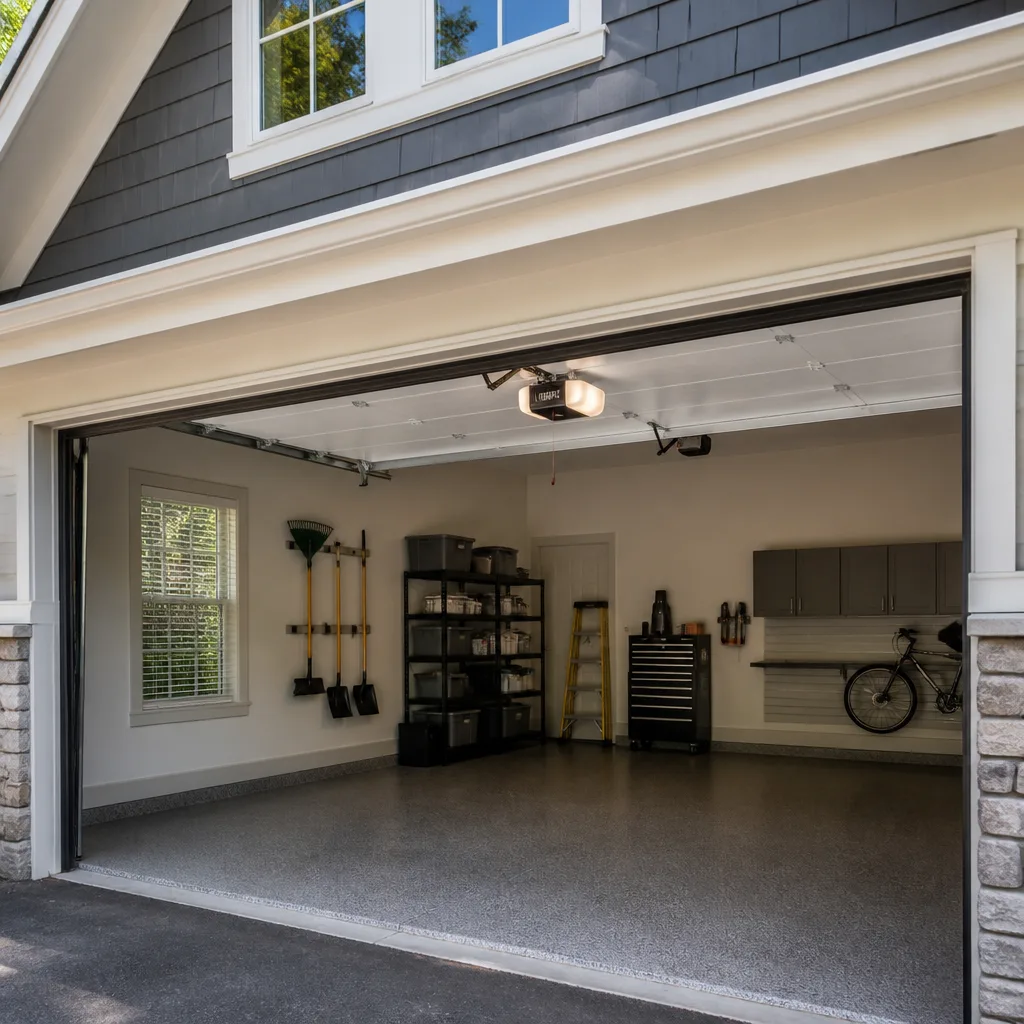
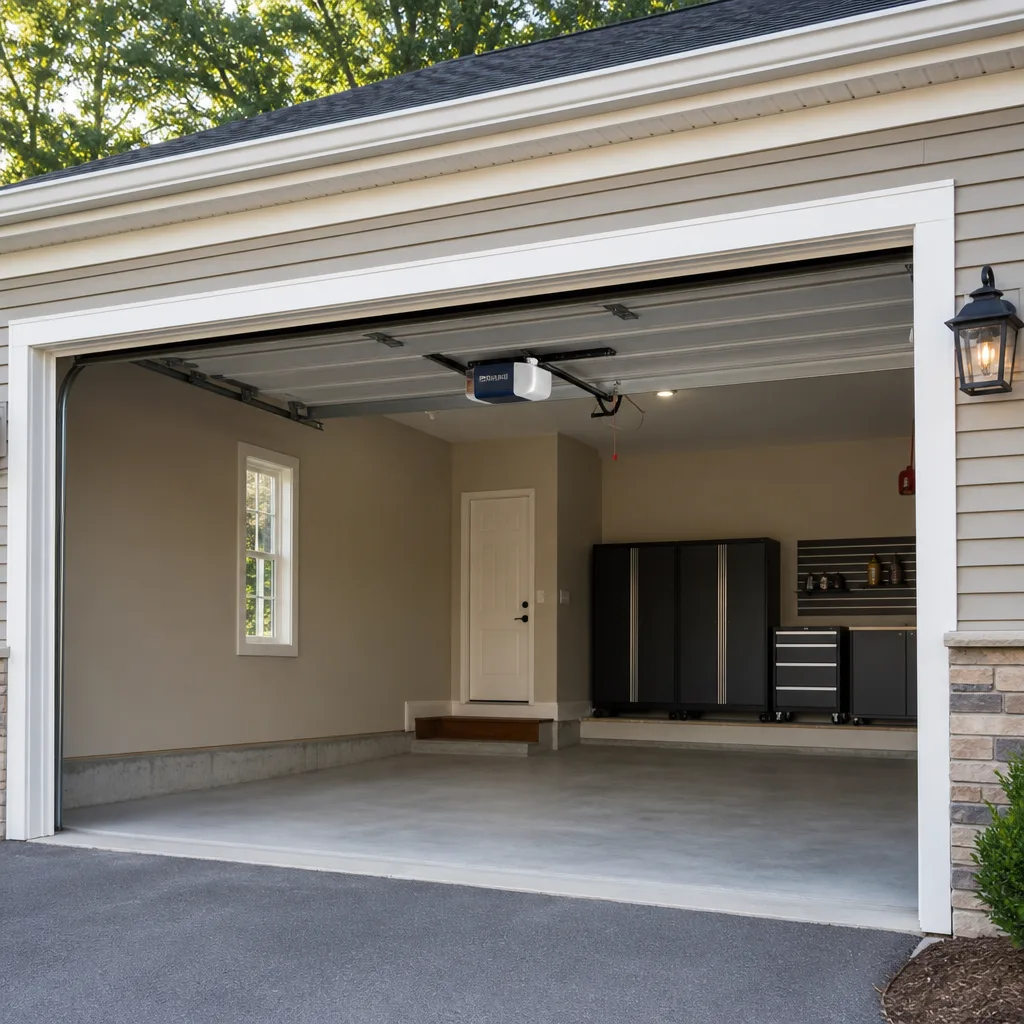
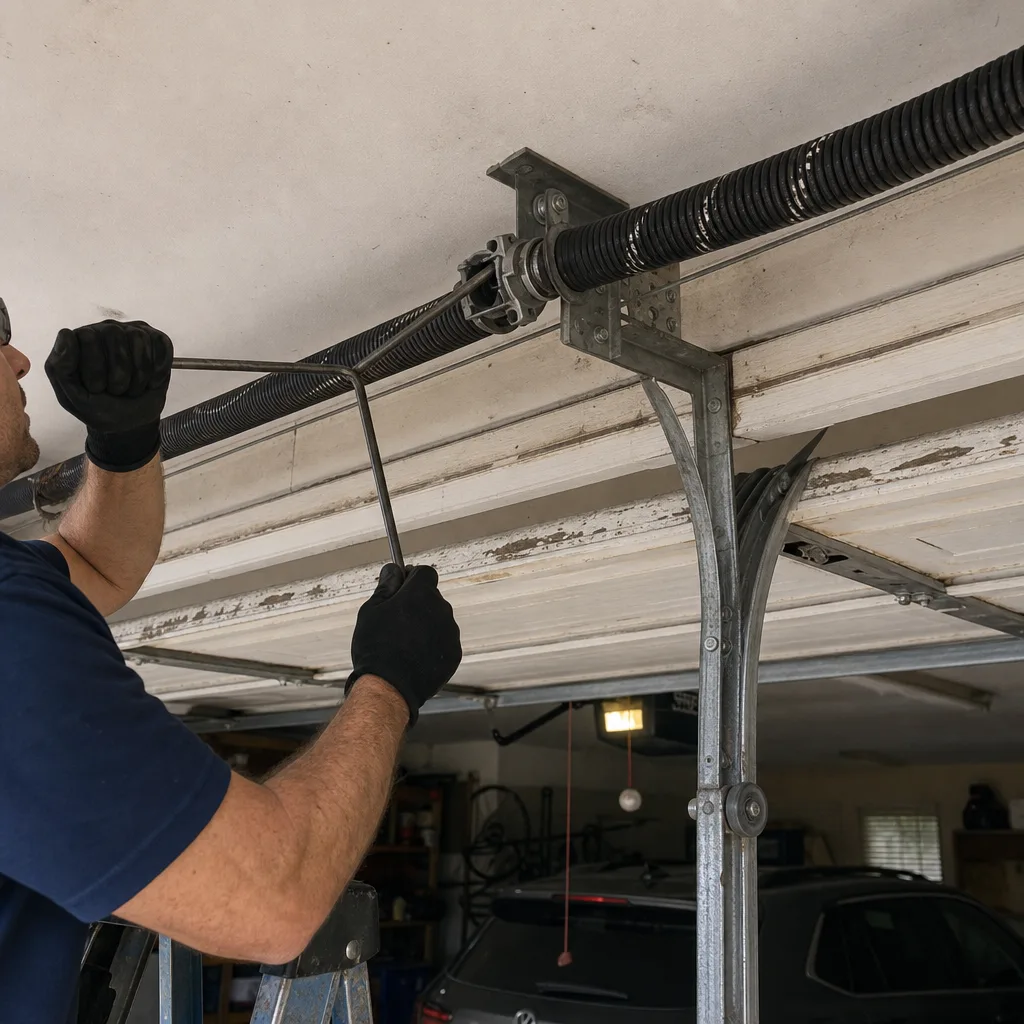 Before
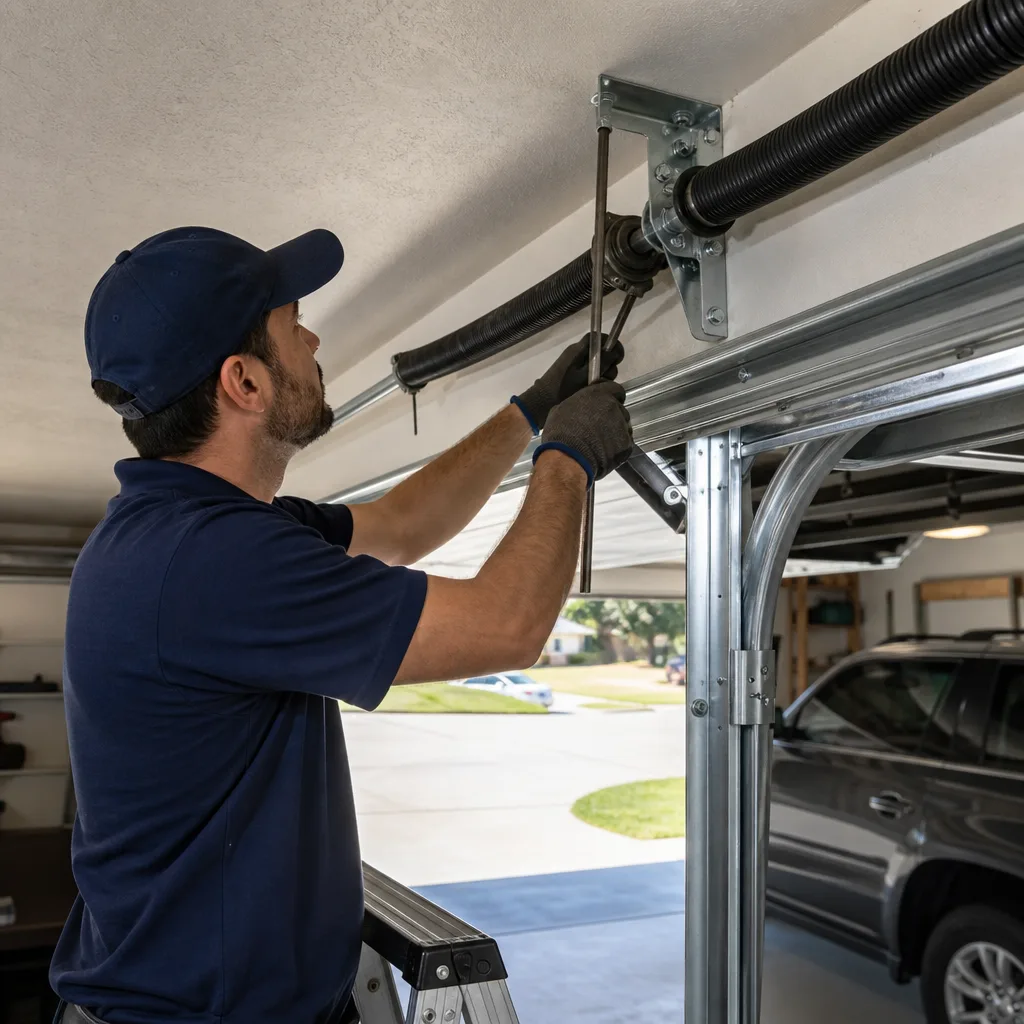 After
After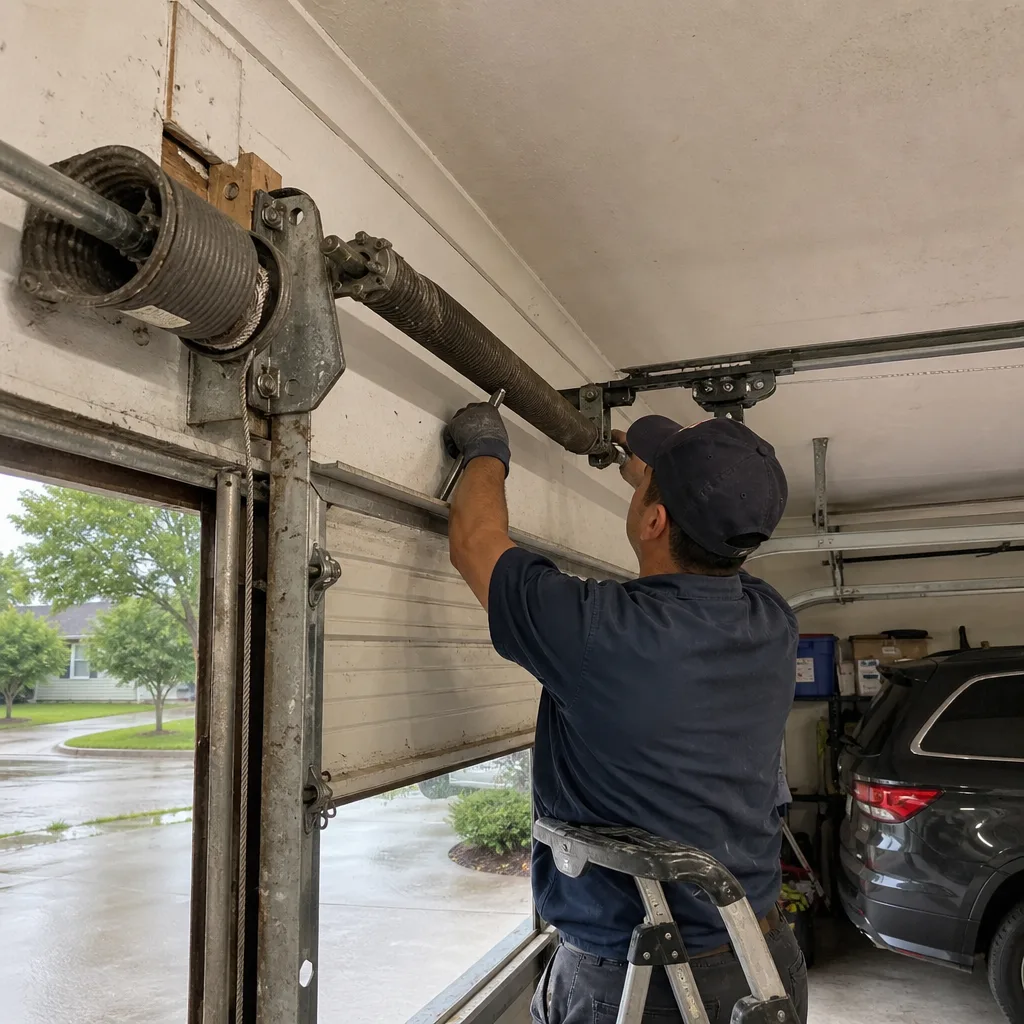 Before
 After
After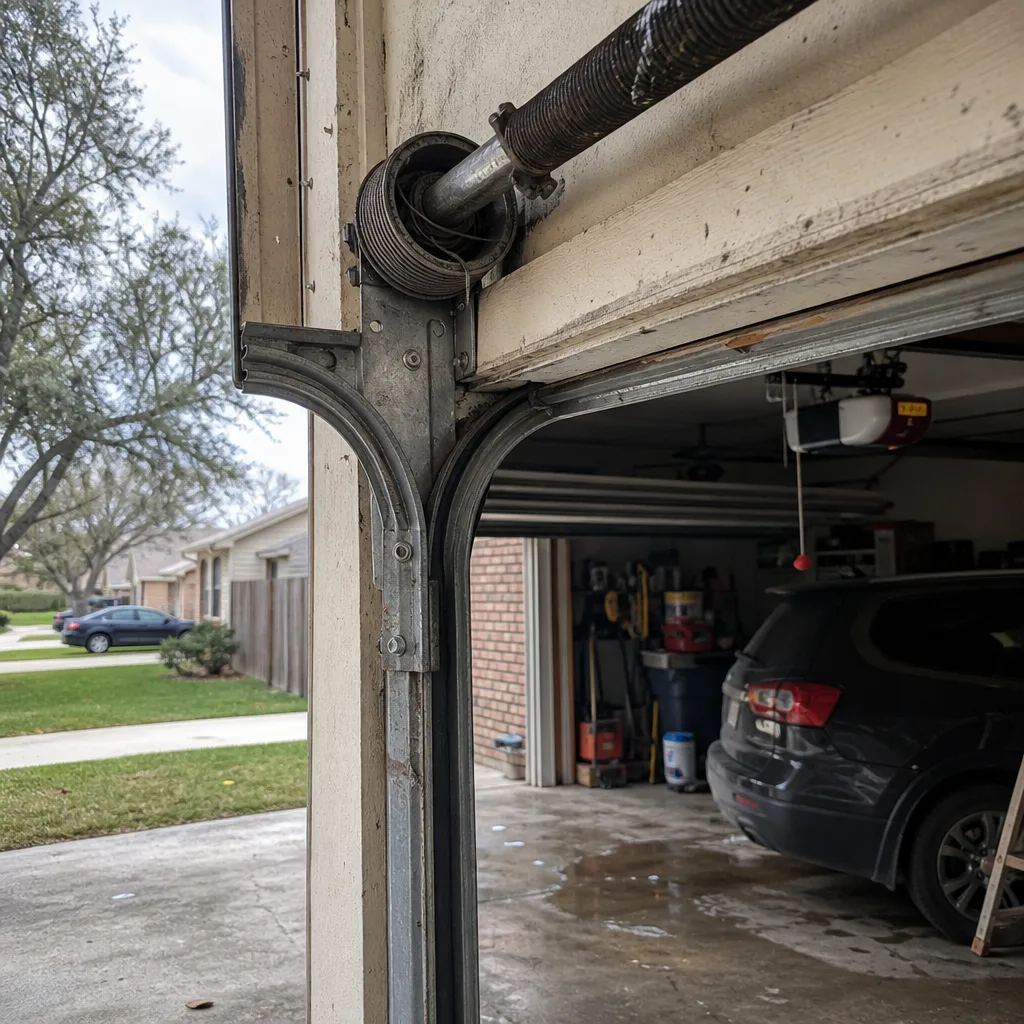 Before
 After
AfterDIY vs Professional Garage Door: The League City Homeowner’s Decision Guide
Garage door springs store enough energy to break a wrist or lacerate a face in under a second. That’s not a scare tactic - it’s the reason professional liability insurance for this trade costs what it does, and it’s the only honest starting point for a DIY conversation. In League City, where humidity from Clear Lake accelerates cable corrosion and afternoon thunderstorms can mask the sound of a failing spring, homeowners face a real choice: handle maintenance yourself to save money, or recognize when the physics involved make professional help the only rational path. This guide draws a clear line between the two, based on what we’ve seen across 42 years of calls from League City neighborhoods from South Shore Harbour to Magnolia Creek. For more guides & resources, visit our blog.
Quick Answer
Homeowners in League City can safely handle lubrication, safety sensor alignment, remote programming, and visual inspections. Any work involving springs, cables, drums, or tensioning hardware requires a trained technician due to lethal stored energy. The dividing line is not skill level - it’s the pounds of force involved.
Table of Contents
- What League City Homeowners Can Safely Do Themselves
- The Danger Zone: Tasks That Require a Professional
- The Hidden Costs of DIY Parts and Mistakes
- How DIY Work Voids Manufacturer Warranties
- The One DIY Task That Saves Real Money: Maintenance Logging
- How League City’s Climate Affects Your Decision
- When to Call a Professional in League City
- Frequently Asked Questions
What League City Homeowners Can Safely Do Themselves
There is honest money to be saved on garage door work, and it lives in the routine maintenance category. These tasks carry no meaningful injury risk, require no special tools beyond what most League City homeowners already own, and directly extend the life of your system - see our Garage Door Repair Maintenance Checklist for League City Homeowners for a complete seasonal routine.
Safe Task 1: Visual Inspection
Once per season, spend ten minutes looking at what you normally ignore. Check the cables for fraying or rust, particularly where they wrap around the bottom brackets. Look at the rollers - are they rolling or sliding? Inspect the weather seal along the bottom for cracking; League City’s UV exposure and occasional flooding from heavy Gulf rains make this a common failure point. If you spot something wrong, you’ve done the hard part. Call for a repair rather than attempting the fix yourself.
Safe Task 2: Lubrication
Use a silicone-based spray or white lithium grease on the roller bearings, hinge pivots, and the top of the rail where the trolley travels. Do not lubricate the track itself - that attracts grit and causes more problems than it solves. Do not touch the spring. A light coating on moving metal-to-metal contact points, done twice yearly, reduces noise and wear. In League City, where salt air from the bay accelerates corrosion, this simple step adds measurable life to hardware.
Safe Task 3: Safety Sensor Alignment
Those two small boxes near the floor on either side of the door are photoelectric sensors. If your door reverses for no apparent reason or refuses to close, check that:
- Both sensors show a steady light (usually green or amber, depending on brand).
- Nothing blocks the beam - leaves, spider webs, or stored items are common culprits in League City garages.
- The sensors face each other squarely; bumping one with a trash can or bike handle is enough to knock it off alignment.
Loosen the wing nut, adjust until both lights hold steady, then retighten. This fixes roughly 30% of “my door won’t close” calls we receive.
Safe Task 4: Remote and Keypad Programming
Every opener manufacturer - LiftMaster, Chamberlain, Genie, Craftsman - publishes clear programming instructions. If you’ve lost a remote or need to erase old codes after a home sale, this is owner-appropriate work. The learn button on the motor unit, usually colored purple, yellow, or red depending on the radio frequency, starts a 30-second window to pair a new device. No tools, no tension, no risk.
Safe Task 5: Track Cleaning
Wipe the inside faces of the vertical and horizontal tracks with a damp cloth to remove accumulated grime. Do not bend, adjust, or loosen the track brackets - the precise spacing between tracks is what keeps the door from binding. Cleaning is safe; anything that changes the track geometry is not.
These five tasks, done consistently, prevent the majority of premature failures. They are also the full extent of what we recommend homeowners attempt without training. The boundary is sharp and worth respecting.
The Danger Zone: Tasks That Require a Professional
The physics of a garage door system create a counterintuitive reality: the door you struggle to lift manually weighs nothing during normal operation because the springs carry the entire load. That convenience is purchased with stored mechanical energy, and releasing it incorrectly converts the hardware into a projectile.
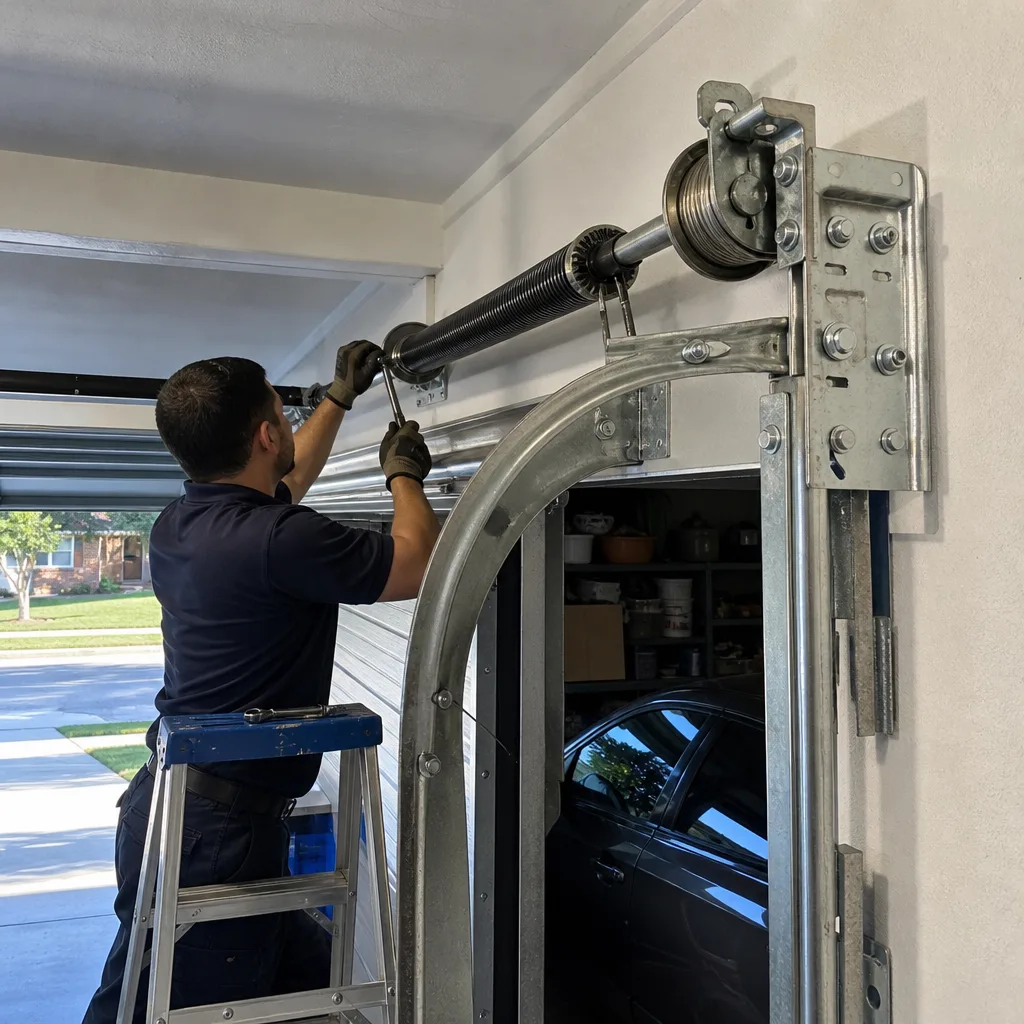
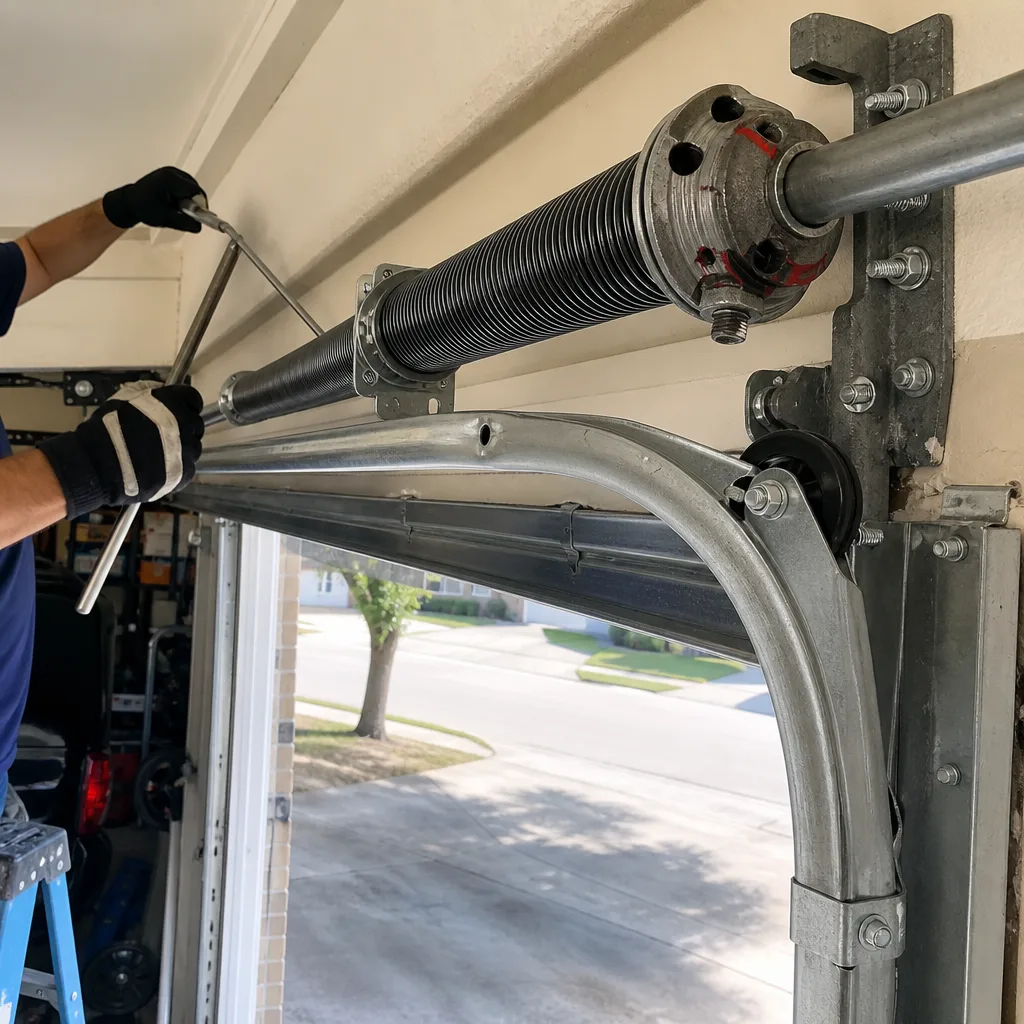
Torsion Spring Replacement
A standard 16-foot wide door in a League City home uses one or two torsion springs wound to between 8,000 and 15,000 inch-pounds of torque. The winding cones, the bars inserted to add or release tension, and the cast-iron drums are all engineered for controlled transfer of that energy. A slipped bar, a cracked cone, or a miscounted turn releases the full load instantly. We’ve seen broken wrists, facial lacerations requiring stitches, and a garage wall punched through by a winding bar. Professional liability insurance for garage door technicians runs high for a reason; no YouTube tutorial changes the force involved.
Extension Spring Replacement
Older League City homes, particularly in established neighborhoods like Countryside or Rustic Oaks, may still have extension spring systems running parallel to the horizontal tracks. These stretch and contract with each door cycle, and they are typically paired with a safety cable that contains the spring if it breaks. That safety cable is itself under load. Extension springs store less energy than torsion springs but are more prone to sudden failure from metal fatigue. Replacement requires releasing door weight, detaching cables under tension, and reinstalling with correct initial stretch. The risk profile is identical: uncontrolled release of stored energy.
Cable Work
The lift cables that run from the bottom brackets to the drums are not simple ropes. They are aircraft-grade galvanized wire, sized to the door weight, and they wrap onto the drums in a specific geometry that maintains level lift across a wide or uneven door. A frayed cable must be replaced in matched pairs, properly wound onto the drum with correct tension, and tested for equal lift. A cable that slips or snaps during adjustment whips with enough force to cut skin. We’ve replaced cables on doors where a homeowner’s partial repair left one side lifting faster than the other, stressing the door panel until it cracked.
Drum and Bearing Plate Adjustment
The cable drums at each end of the torsion tube are not interchangeable left-to-right; they are mirror-threaded. The bearing plates that support the tube must be level and properly torqued to the header. A door that opens crooked, or makes a loud popping sound at a certain height, usually has a drum or bearing issue. Diagnosis requires knowing whether the problem is cable stretch, drum position, or spring torque imbalance. Correction requires working on loaded hardware. This is not a learning environment.
Spring Tension Adjustment
Sometimes a door is not broken but poorly balanced - it drifts closed when half-open, or feels heavy to lift manually. This indicates incorrect spring torque, which changes as springs age and lose some of their initial wind. Adding or releasing a quarter-turn of tension is a precise measurement task done with winding bars on loaded hardware. The adjustment itself is the dangerous act, not the diagnosis.
The rule is simple: if the task requires touching a spring, cable, drum, or tensioning device, it belongs to a trained technician with the correct tools and insurance. Skill with other home repairs does not transfer; the hazard is unique to this trade.
The Hidden Costs of DIY Parts and Mistakes
League City homeowners who attempt their own repairs often discover that parts sourcing and error correction cost more than the original professional quote would have. These are the expenses that do not appear in online tutorials.
Wrong Spring Specifications
Big-box stores in the League City area stock a limited range of replacement springs, typically rated for standard 8- or 9-foot doors with common weights. Your actual door may differ in width, panel material (steel, wood composite, or insulated sandwich construction), window placement, or track configuration. A spring must be matched to door weight, drum diameter, and expected cycle life. Install a spring with too low a cycle rating - common with retail parts - and it fails in 18 months instead of 7-10 years. The second replacement, plus the labor you already spent, exceeds the cost of doing it right once.
We carry springs rated from 10,000 to 30,000 cycles on every truck, measured by wire gauge, inner diameter, and length. A homeowner cannot determine the correct specification without unwinding the broken spring to measure it - which returns us to the danger zone.
Diagnostic Time Added to Corrected DIY
When we arrive at a League City home after a DIY attempt, the invoice starts with diagnosis. We must determine what was originally wrong, what the homeowner changed, whether those changes introduced new problems, and what remains to be corrected. This takes longer than diagnosing an untouched system. The additional labor shows on the bill. A straightforward spring replacement might take 45 minutes; a botched DIY correction can take two hours. The money “saved” by attempting the work evaporates, and the risk was borne for nothing.
Tool Costs
Proper torsion spring winding bars are solid steel, 18 inches long, and sized to the winding cone. Using a screwdriver, bolt, or other substitute is how injuries happen. A set of correct bars costs $40-60. A winding tool with calibrated torque measurement runs $200+. These are single-purpose tools for a job most homeowners will do once or twice in twenty years of homeownership. The economics do not work.
Damage to Door or Opener
An improperly balanced door overloads the opener motor, stripping nylon gears in chain-drive units or burning out circuit boards in belt-drive models. A door that crashes closed because spring tension was set wrong can bend bottom brackets, crack panels, or damage vehicles. We’ve replaced entire door sections and openers that failed as secondary damage from a primary spring error. The original $250 spring repair becomes a $1,200 system replacement.
Code and Permit Issues
League City requires permits for new garage door installations and structural modifications; see Garage Door Permits, Codes & Inspections in TX: What You Need to Know for full details. While spring replacement on an existing door typically does not trigger permitting, any work that alters the header, framing, or electrical supply to the opener may. A DIY installation that skips permit inspection can block home sale disclosure or require costly correction later. Professional contractors handle permit coordination as part of the job.
How DIY Work Voids Manufacturer Warranties
Most homeowners do not read warranty terms until something fails. By then, the exclusion language has already done its work.
Clopay and Amarr Door Warranties
Sectional door manufacturers typically cover panel delamination, paint finish, and hardware for 1-10 years depending on product tier. The hardware warranty - hinges, rollers, track - is void if the door was installed by an uncertified technician or if subsequent adjustments were made by a non-professional. Clopay’s residential warranty explicitly states that “damage resulting from improper installation, adjustment, or maintenance not performed by an authorized dealer” is excluded. Amarr’s language is similar. A homeowner who replaces their own bottom bracket and later discovers a panel defect finds both claims denied.
LiftMaster, Chamberlain, and Genie Opener Warranties
Opener warranties cover motor and drive systems for 1-4 years. All three major brands exclude damage from “improper installation, alteration, or use of non-approved accessories.” Programming a remote is approved owner activity; hardwiring electrical supply, modifying travel limits, or replacing the logic board is not. A DIY travel limit adjustment that causes the door to slam and damage the opener trolley voids the motor warranty. The $180 logic board replacement becomes entirely out-of-pocket.
Wayne Dalton TorqueMaster Systems
Wayne Dalton’s enclosed spring system, common in League City homes built in the 1990s and 2000s, is particularly warranty-sensitive. The springs are inside a steel tube, wound with a proprietary clutch mechanism. Owner disassembly voids all component warranties and often damages the clutch in ways that make professional repair more expensive. We see these calls regularly: a homeowner opens the tube, discovers they cannot reassemble it, and we must replace the entire spring tube assembly rather than performing a simpler spring swap.
How to Check Your Warranty Status
- Locate your original purchase documentation or dealer sticker on the door or opener.
- Find the warranty term sheet, usually available on the manufacturer website by model number.
- Read the “Exclusions” or “Limitations” section for installation and service requirements.
- Contact the manufacturer’s customer service line with your serial number to confirm whether a specific repair requires authorized service.
When in doubt, professional service preserves warranty coverage. The cost of a service call is usually less than the value of a voided 10-year hardware warranty on a premium door.
The One DIY Task That Saves Real Money: Maintenance Logging
Of everything a homeowner can do without risk, keeping a written maintenance log delivers the highest return. It costs nothing, requires no tools, and directly reduces professional service time - which means reduced labor charges on every future call.
What to Record
- Date of each professional service, with technician name and company.
- Parts replaced, including spring specifications (wire gauge, length, inner diameter, cycle rating).
- Opener model, serial number, and date of manufacture.
- Any changes in door behavior: new noises, slower operation, uneven closing, remote range reduction.
- Weather events that may affect operation: flooding, lightning strikes, extended power outages.
How It Saves Money
When a garage door repair in League City technician arrives to a problem, half the diagnostic time is spent reconstructing history. When did this start? What was replaced last? Is this a new issue or a recurrence? A maintenance log answers these questions in thirty seconds. The technician moves directly to testing and repair, cutting 15-30 minutes from the bill. On a standard service rate, that’s $50-100 saved per call.
More importantly, accurate history prevents misdiagnosis. A door that “suddenly” won’t stay open may actually have shown gradual drift for months. A homeowner who noted “door drifts from half-open position, March 2024” gives the technician a clear pointer to spring torque loss rather than a mystery requiring full system testing.
We ask every League City customer with a log to have it ready when we arrive. The best-prepared homeowners keep a simple notebook in the garage, or a phone note shared between household members. It is the single most effective money-saving habit we have observed in 42 years of service calls.
How League City’s Climate Affects Your Decision
Geography and weather in League City create specific conditions that influence both DIY maintenance schedules and the urgency of professional repair.
Humidity and Salt Air Corrosion
Proximity to Clear Lake and Galveston Bay means higher ambient humidity and occasional salt air exposure, particularly for homes south of FM 518 or east of Interstate 45. Steel cables, hinges, and bottom brackets corrode faster than in inland Texas markets. A cable that might last 12 years in Katy fails in 8 in League City. This accelerates the value of regular visual inspection - a homeowner who catches early rust can schedule replacement before failure, rather than dealing with a door that won’t open on a Monday morning.
Thunderstorm and Wind Load Stress
League City sits in a high wind zone. Garage doors are the largest opening in most homes and the most vulnerable to pressure differentials during severe weather. A door with weakened springs or loose track hardware is more likely to fail under wind load, potentially allowing structural damage. After any significant storm, a visual inspection is warranted. If the door shows new binding, noise, or alignment issues, professional assessment is prudent - the damage may be beyond what DIY maintenance can address.
Temperature Swings and Lubrication
Coastal Texas temperature swings from 45°F winter mornings to 95°F summer afternoons change the viscosity of lubricants and the expansion characteristics of metal components. A door that runs quietly in March may groan in August as grease thins and migrates. Seasonal lubrication - we recommend April and October for League City - addresses this cycle. It is safe, owner-appropriate, and prevents the accelerated wear that leads to professional repair calls.
Flooding and Bottom Seal Maintenance
Low-lying League City neighborhoods, including parts of South Shore Harbour and waterfront communities, experience occasional garage flooding during heavy rain events. The bottom rubber seal is the primary water barrier. A cracked or compressed seal allows water intrusion that damages stored items and accelerates rust on lower door hardware. Seal replacement is technically owner-possible but requires releasing bottom bracket tension on some door designs. We recommend professional replacement if any bracket hardware must be disturbed.
When to Call a Professional in League City
Certain situations do not permit delay or experimentation. Call a trained technician if you encounter any of the following:
- A broken spring, identified by a loud bang, a gap in the coil, or a door that feels suddenly heavy.
- A frayed or snapped lift cable, or any cable that has slipped off its drum.
- A door that opens unevenly, with one side rising faster than the other.
- A door that reverses immediately after touching the floor, indicating incorrect travel limit or force setting.
- Any opener behavior change after a lightning storm - power surges damage circuit boards in ways that worsen with continued use.
- Visible rust on cables, particularly within 18 inches of the bottom bracket where moisture collects.
- A door that has been struck by a vehicle, even lightly; impact misaligns track and stresses panels in ways that compound over time.
Mainspring Garage Door Co. offers free estimates in League City. Our technicians arrive with springs, cables, openers, and hardware for all major brands on the truck, and most repairs are completed in a single visit. The flat price is stated before any work begins - no surprises on the bill. Call (936) 246-3131 to schedule.
Common Mistakes to Avoid
- Using a screwdriver as a winding bar. We have seen serious facial injuries from this substitution. Winding bars are solid steel, precisely sized, and inexpensive. There is no safe alternative.
- Replacing only one spring on a two-spring door. Springs age together and have matched cycle ratings. A new spring paired with an old one creates imbalance, overloads the opener, and guarantees a second failure within months.
- Buying springs by door weight alone. Cycle rating, wire gauge, inner diameter, and length all matter. A spring that fits but is under-rated for your usage pattern fails prematurely and may not be returnable to a big-box store.
- Ignoring a door that “just needs a little help” to open. This indicates spring failure or severe imbalance. Continued operation damages the opener and risks sudden complete failure with the door in a partially open position.
- Adjusting travel limits without checking force settings. A door that closes too far may have a travel limit problem, or it may have a force setting that is masking a mechanical binding. Correcting the limit without addressing the root cause creates a crushing hazard.
- Skipping the safety reverse test after any adjustment. Federal law requires automatic reversal on contact. A door that fails this test is a liability risk and a danger to children and pets. Test monthly with a 2×4 laid flat in the door path.
- Assuming all openers program the same way. LiftMaster’s yellow learn button, Chamberlain’s purple button, and Genie’s Intellicode systems use different timing and button sequences. Incorrect attempts can lock the opener in a confused state requiring factory reset.
Frequently Asked Questions
Professional torsion spring replacement in League City typically ranges from $180 to $340 for a standard residential door, including parts, labor, and adjustment; our Garage Door Cost Breakdown: The League City Homeowner’s Reference for 2026 explains what drives these numbers. Extension spring systems run slightly less, while high-cycle springs or dual-spring setups on heavier doors fall at the higher end. The exact price depends on door size, spring specification, and whether additional hardware like cables or rollers need replacement. We state the flat price before starting any work. Call (936) 246-3131 for a free estimate.
You should not replace even one spring without training, and you should never replace only one spring on a two-spring system. The unmatched torque creates immediate imbalance, strains the opener, and guarantees early failure of the remaining old spring. Professional replacement includes matching cycle-rated springs and full rebalancing. The safety risk of working on loaded torsion hardware far exceeds any potential savings.
No. At Mainspring Garage Door Co., the price we quote after inspection is the price on the invoice. We do not charge diagnostic fees separate from repair fees, and we do not discover “additional problems” after work begins. If we find something unexpected, we discuss it and obtain approval before proceeding. This is the no-surprises approach we’ve maintained since 1984.
Warning signs include: the door feels heavier to lift manually, visible gaps in the coil, a loud bang from the garage (often mistaken for a gunshot or car backfire), or the door rising unevenly. In League City’s humid climate, surface rust on the spring is also a predictor. If you observe any of these, schedule professional inspection before complete failure leaves your door inoperable.
It can. If a DIY repair fails and causes injury to a visitor or damage to a vehicle, your insurer may deny the claim based on unlicensed work on a known high-risk system. Professional technicians carry liability insurance specifically for this trade. The cost of a service call is minor compared to exposure from an uninsured incident.
Lubricate moving parts twice yearly, keep a maintenance log, test safety reverse monthly, and perform seasonal visual inspections. These habits prevent the majority of premature failures. When something breaks - and eventually something will, after 10,000+ cycles - call a professional for anything involving springs, cables, or tensioning hardware. The boundary is clear and worth respecting.
The Bottom Line
The DIY-versus-professional question for garage door work has a specific answer that depends on which component needs attention, not on how handy you are. Lubrication, sensor alignment, remote programming, and careful visual inspection are genuinely owner-appropriate and save money over a door’s lifespan. Any task involving springs, cables, drums, or tensioning hardware carries lethal force and belongs to trained technicians with proper tools and insurance. In League City, where humidity and coastal weather accelerate wear, consistent owner maintenance plus timely professional repair is the most economical path. The money you might save on a DIY spring replacement is outweighed by injury risk, warranty exposure, and the high probability of creating a more expensive problem. Know the line, respect it, and keep a maintenance log so that when you do call a professional, the repair is faster and costs less.
Written by Carl Dutton, Owner at Mainspring Garage Door Co., serving League City since 2016.